
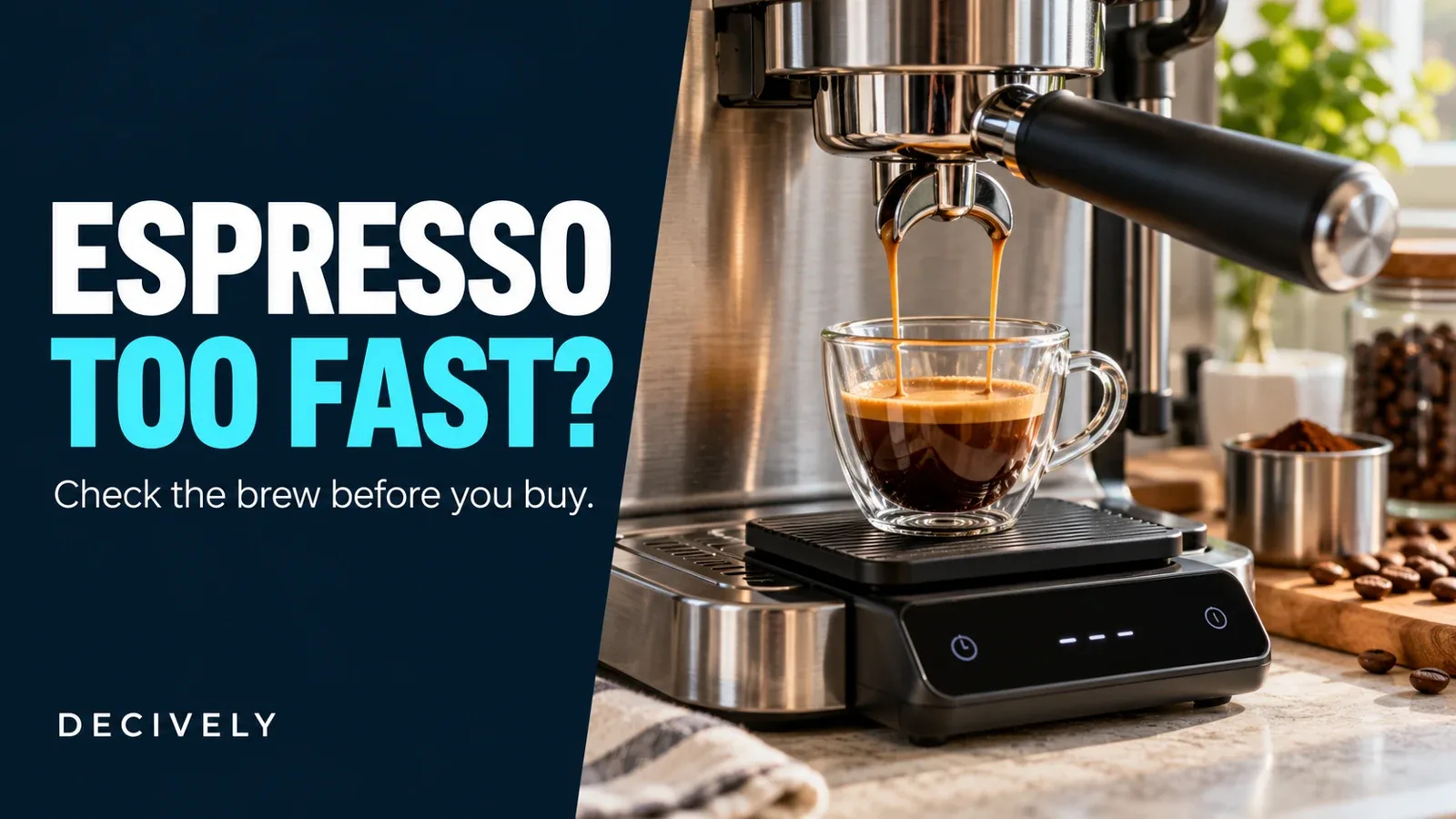
Espresso running too fast? Start with a measured shot
If you have espresso running too fast, start by checking grind size, coffee dose and how evenly you prepare the basket. A fast shot does not automatically mean the machine needs replacing. First establish what went into the basket, what came out and when you started the timer.
This guide covers home espresso machines with a portafilter. Capsule machines and fully automatic bean-to-cup systems need their own manufacturer troubleshooting. It also assumes you are trying to improve a conventional espresso recipe: some deliberately fast recipes can taste good.
For espresso running too fast, the useful question is whether the flow is repeatable and the drink tastes right for your recipe. Work through the checks below before ordering accessories. This is a research-based guide, not a report of Decively laboratory or hands-on testing.
Measure dose, yield and time before changing anything
A timer alone is a weak way to diagnose espresso running too fast. Record the dose (dry coffee in grams), yield (espresso in the cup in grams), elapsed time and taste. Weigh the output instead of judging volume through the crema.
An example starting recipe is 18g of coffee producing 36g of espresso: a 1:2 brew ratio. Use that dose only in a basket designed for it. A smaller basket needs its own appropriate recipe; forcing in 18g is not an upgrade.
Baratza’s dialing-in guide gives 25–32 seconds for its example. Treat that as a reference, not a pass-or-fail rule for every coffee. Pre-infusion, pressure profiles and different recipes make comparisons less simple.
When investigating espresso running too fast, use one timing convention throughout. If your reference starts when brewing is activated, include pre-infusion. A scale that starts timing at the first drops will show a shorter interval. Write down the convention so you do not compare different measurements.
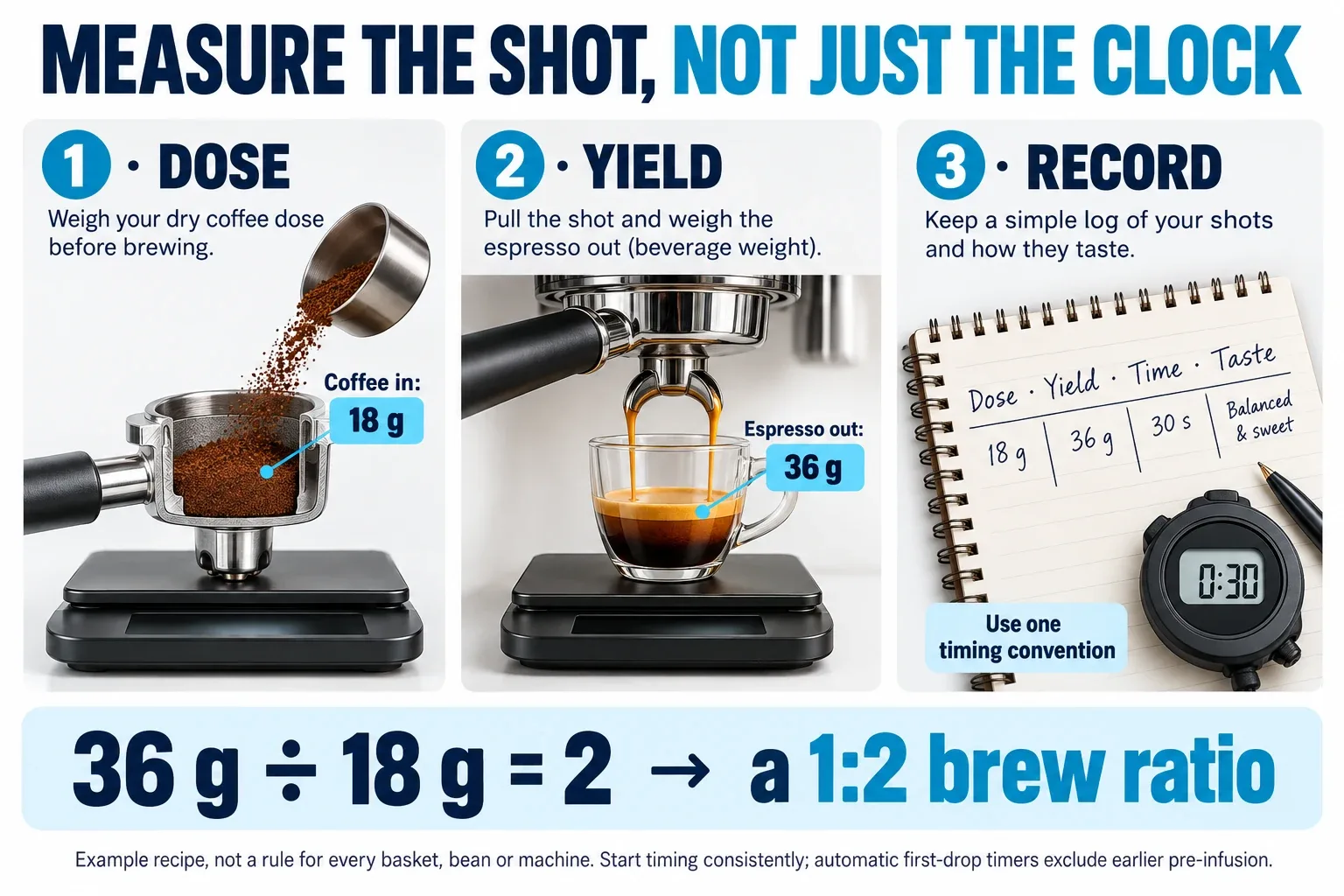
Illustrative recipe: 18g in and 36g out equals 1:2. The notebook is an example, not a measured Decively result or a promise of flavor. View diagram at full size →
Match the symptom to the first check
Use this table to narrow down espresso running too fast. Symptoms suggest a direction; they do not establish a single cause. Keep the same beans, dose and target yield while testing the next change.
On a small screen, swipe the table sideways to read every column.
A spouted portafilter hides much of the flow beneath the basket. Two neat streams do not prove that there is no channeling. Equally, a slightly untidy pour is not enough evidence to buy a new machine. Use the drink, measurements and repeatability together.
Check the basket before chasing a grind setting
The basket matters when diagnosing espresso running too fast. A conventional single-wall, non-pressurized basket relies heavily on the coffee bed for resistance. A dual-wall or pressurized basket adds a different restriction, so the same advice may not apply in the same way.
The Breville BES840 manual distinguishes single-wall baskets for freshly ground beans from dual-wall baskets suited to pre-ground coffee. Identify your own basket using your machine’s manual rather than guessing from the handle shape.
If you use supermarket pre-ground coffee, you cannot make its grind finer with a tamp. Follow the pressurized-basket instructions where applicable. Before buying a single-wall basket, check both physical compatibility and whether your grinder can support it.
Make a small grind adjustment and keep the recipe fixed
For espresso running too fast through a suitable single-wall basket, a finer grind is often the next useful experiment. Change a small amount, then repeat the same dose and target beverage weight. Altering three variables together makes the result hard to interpret.
Follow the grinder’s adjustment instructions. For example, the Encore ESP manual says to adjust while the grinder is running or completely empty of beans. Other grinders have their own requirements. Allow for retained grounds according to the manufacturer’s guidance before judging a new setting for espresso running too fast.
If your machine has a built-in grinder, explore its documented adjustment range first. An external grinder is unnecessary if the existing one can produce a useful, repeatable result. At the finest usable setting, revisit the basket, dose and preparation before assuming you have reached a hardware limit.
A shot that slows dramatically or stops after an adjustment is feedback to back off. Do not keep making the grind finer just to hit a textbook time. The goal is a repeatable recipe you enjoy, not the longest possible extraction.
AVAILABLE ON AMAZON · AFFILIATE LINKS
Measure first; upgrade the grinder only if needed
A scale measures the recipe; a grinder changes the grind. Buy only for the limitation you have identified. Check the exact model, local voltage where applicable, seller and return terms.
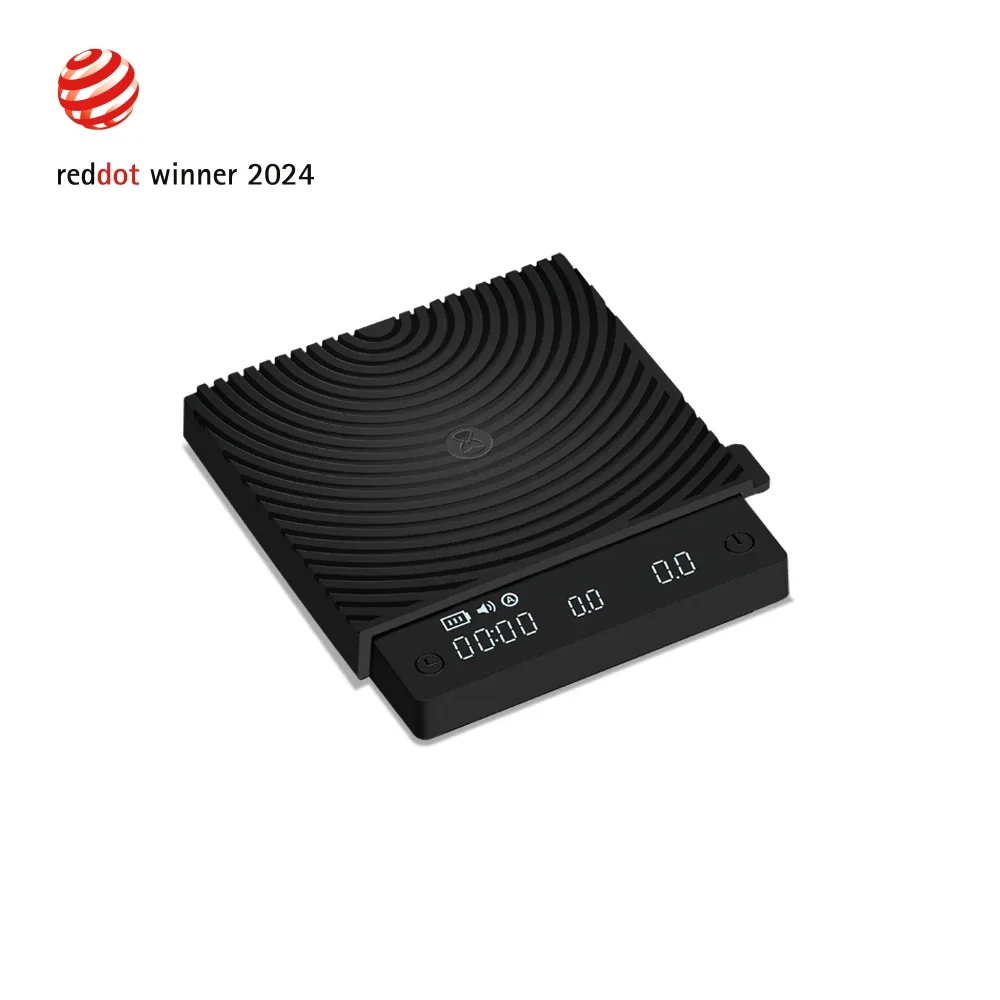
TIMEMORE Basic Mini — black
Measure dose and yield; check drip-tray and cup clearance.
Check options on Amazon →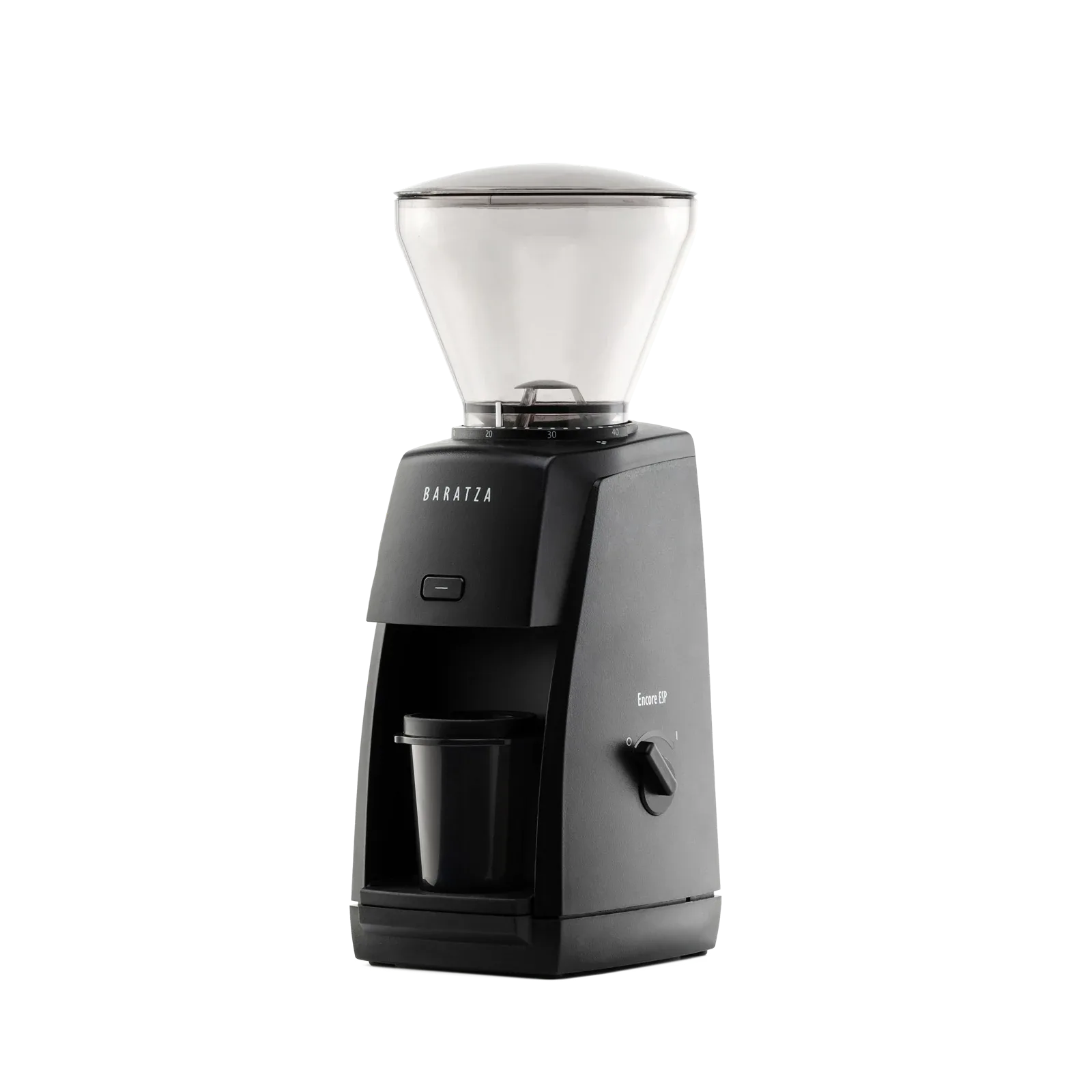
Baratza Encore ESP — black ZCG495BLK
Only if your existing grinder lacks useful espresso adjustment.
Check options on Amazon →As an Amazon Associate, Decively earns from qualifying purchases, at no additional cost to you. Prices and availability can change.
Keep dose and basket headspace consistent
A low or inconsistent dose can contribute to espresso running too fast. Use the basket’s intended dose range and a scale to repeat it. Do not add more coffee indefinitely to make the water slow down: overfilling introduces another problem.
Basket diameter alone does not tell you the right dose. Capacity, coffee and the machine’s clearance all matter. Follow the supplied basket guidance, and keep enough headspace for the intended setup rather than relying on a universal coin test.
If you already own a sufficiently responsive scale that fits under the cup, use it. A dedicated espresso scale is useful when your kitchen scale cannot fit or makes it difficult to stop near the target yield. It does not change the grind or distribute the coffee for you.
Espresso running too fast? Fix uneven preparation first
Espresso running too fast can also involve channeling: water finds an easier route through the puck instead of moving evenly through it. The visible clues can overlap with other causes, so concentrate on repeatable preparation rather than diagnosing from a photograph alone.
Start with a clean, dry basket. Distribute the grounds evenly, then tamp level and consistently. La Marzocco’s puck preparation guidance emphasizes distribution and matching the dose to the basket. It also explains why a wet puck alone does not prove poor extraction.
A needle distribution tool can be an optional aid for clumps; it is not a requirement for everyone. Try improving your existing routine first. A tamper must fit the specific basket, and a different tamper cannot make unsuitable pre-ground coffee finer.
Do not respond to espresso running too fast by simply pushing harder each time. That introduces another variable. Consistent preparation is more useful for diagnosis than an escalating tamping contest.
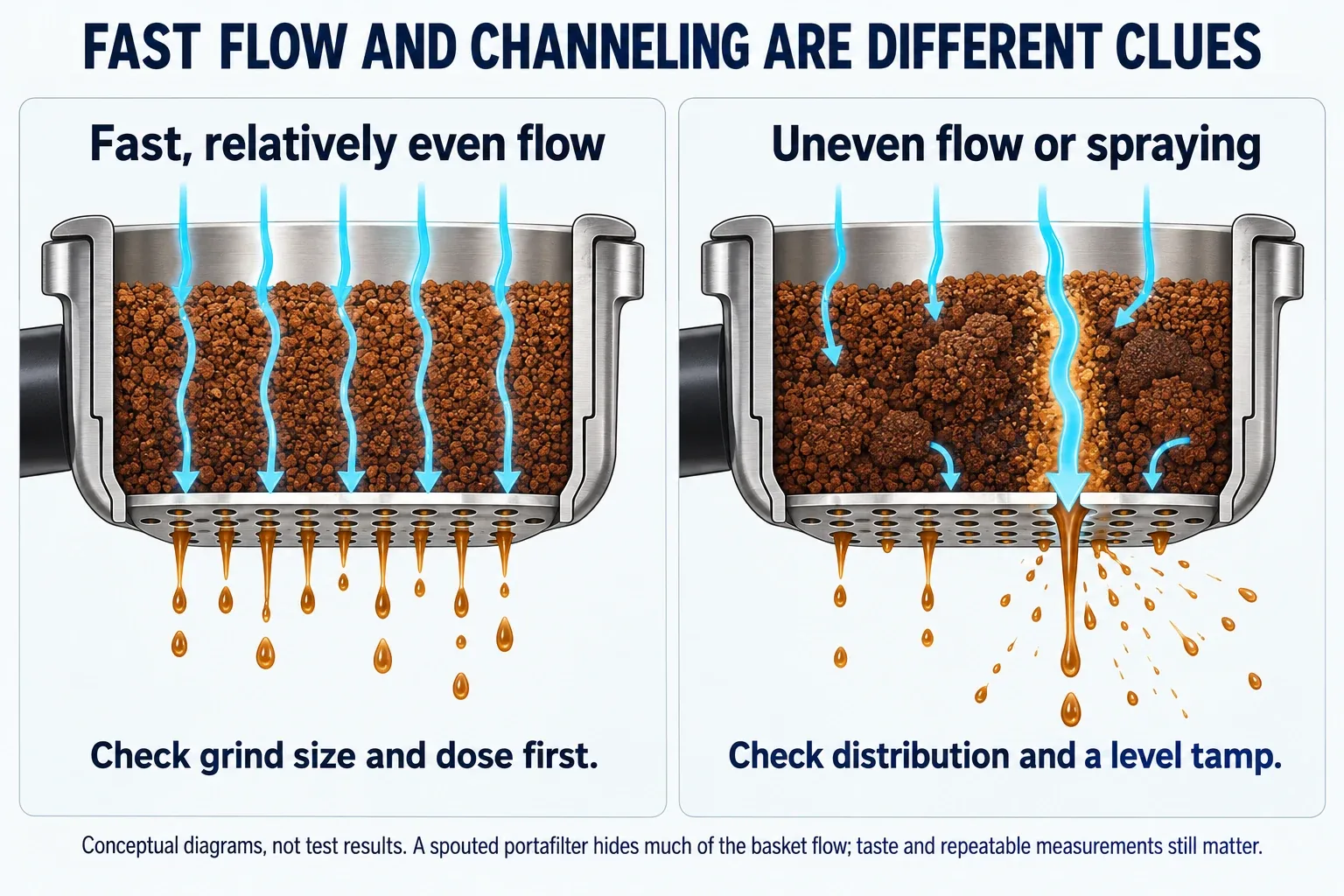
Conceptual cutaways show broad flow and a preferential channel. Real flow is more complex; these are explanatory illustrations, not test results. View diagram at full size →
Changed beans? Dial in again
If espresso running too fast started after opening a different coffee, do not assume yesterday’s setting will suit it. Keep a note of the bean, dose and yield, then adjust from a measured baseline. Buying several accessories at once would obscure what changed.
Keep the machine’s preparation routine and settings consistent as well. Follow the maker’s warm-up and cleaning instructions. Taste can guide the final recipe, but sourness, bitterness or crema alone cannot identify the fault with certainty.
When two attempts differ, first look for something you failed to hold constant: dose, output weight, timing convention or puck preparation. A short written log is more useful than remembering that one shot looked better.
What is worth buying for espresso running too fast?
For espresso running too fast, buy a tool only when it removes a specific obstacle. The two products below serve different jobs: one makes a recipe measurable, while the other offers an espresso adjustment range. Neither guarantees a better drink without dialing in.
TIMEMORE Basic Mini: buy for measurement and fit
The TIMEMORE Basic Mini offers a compact scale and timer. Its 0.1g readout is a display increment, not our independently tested accuracy claim. Check the scale footprint, cup clearance and drip-tray support against your own machine before ordering.
Its automatic espresso timing begins with liquid detection. Use manual timing if your recipe counts from pump activation, including pre-infusion. This distinction matters when investigating espresso running too fast; automatic mode is not inherently a more correct timing standard.
Baratza Encore ESP: buy only for a confirmed grinder limitation
The Baratza Encore ESP has 40 settings, with finer adjustment steps across the 1–20 espresso range. This recommendation is for the black ZCG495BLK, not the standard Encore or the separate ESP Pro model.
It is a reasonable candidate when espresso running too fast persists because your existing grinder cannot reach a useful setting for the chosen basket. Check model, local voltage, warranty and seller before buying. A US electrical listing is not automatically suitable for a European socket and supply.
On a small screen, swipe the table sideways to read every column.
When the machine needs attention—and when replacement makes sense
Persistent espresso running too fast deserves model-specific support if controlled checks with the correct basket produce no useful response, or the machine leaks around the portafilter. Follow the manufacturer’s cleaning and inspection routine. Do not open hot or pressurized parts to investigate.
Avoid buying a generic cleaning chemical or replacement basket simply because you have espresso running too fast. Maintenance products and procedures need to match the machine. If support identifies a limitation or fault, compare repair cost and suitability before replacing it.
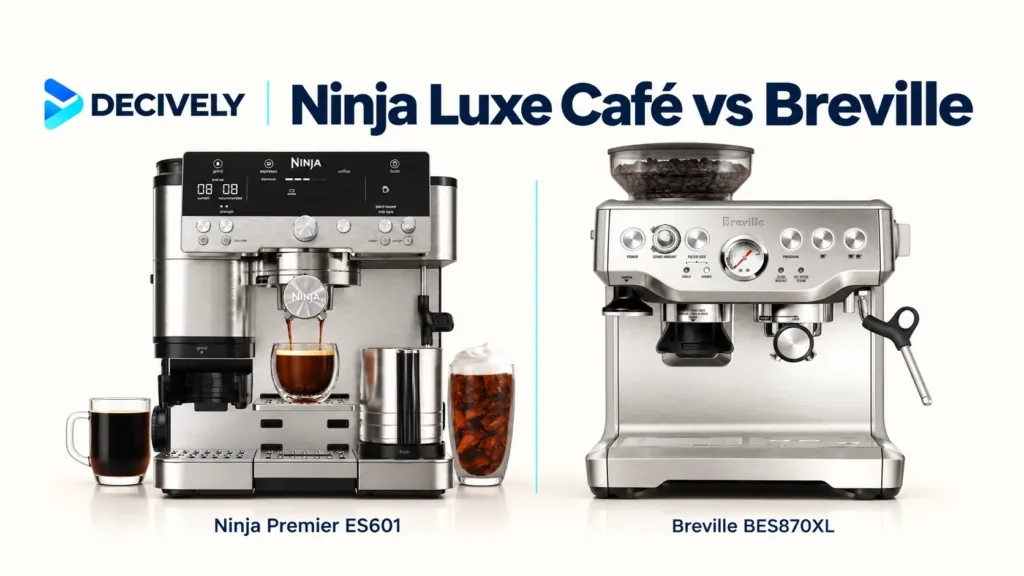
If replacement genuinely becomes the next step, our beginner espresso machine buying guide: Ninja Luxe Café vs Breville explains two different approaches to the workflow. Use it after diagnosis, with a clear idea of which limitation a new machine would solve.
Fast-shot questions, answered
Does espresso running too fast always mean a bad drink?
No. Recipes and timing conventions vary. Judge espresso running too fast against your intended dose, yield and taste, then look for repeatability. A deliberately fast recipe is different from an uncontrolled shot that races to an unwanted output.
Should I tamp harder or increase the dose?
Start with a level, consistent tamp and a dose appropriate to the basket. Changing pressure or overfilling to slow the flow can hide the underlying issue. Make one documented change at a time.
Do I need a bottomless portafilter?
No. It can expose flow beneath the basket, but it is not required to measure dose, output and time. Keep clear of hot water and follow the machine’s instructions. It will not correct the grind by itself.
What should I try first without buying anything?
Identify the basket, repeat the intended dose and yield, and note how you time the shot. Then adjust one variable using your existing equipment. For espresso running too fast, this sequence makes a later purchase much easier to justify—or avoid.
AVAILABLE ON AMAZON · AFFILIATE LINKS
Choose the tool that addresses your actual limitation
A scale measures the recipe; a grinder changes the grind. Buy only for the limitation you have identified. Check the exact model, local voltage where applicable, seller and return terms.
TIMEMORE Basic Mini — black
Measure dose and yield; check drip-tray and cup clearance.
Check options on Amazon → Baratza Encore ESP — black ZCG495BLK
Only if your existing grinder lacks useful espresso adjustment.
Check options on Amazon →As an Amazon Associate, Decively earns from qualifying purchases, at no additional cost to you. Prices and availability can change.
Research notes and primary references
Researched October 23, 2026. Decively has not physically tested these products or measured their performance. Product specifications are manufacturer claims; recommendations apply those documented capabilities to the troubleshooting situations described. Generated images are conceptual illustrations, not evidence of testing.
Breville BES840 manual — basket types and preparation
Baratza — dialing in espresso and example recipe
Baratza Encore ESP manual — adjustment ranges and procedure
La Marzocco — dose, distribution and puck appearance
TIMEMORE Basic Mini — manufacturer features and timing modes
Baratza Encore ESP — manufacturer product page
Product thumbnails: manufacturer imagery from TIMEMORE and Baratza/Breville. Amazon links identify the intended models; check the selected variant and current terms on the destination. As an Amazon Associate, Decively earns from qualifying purchases.