
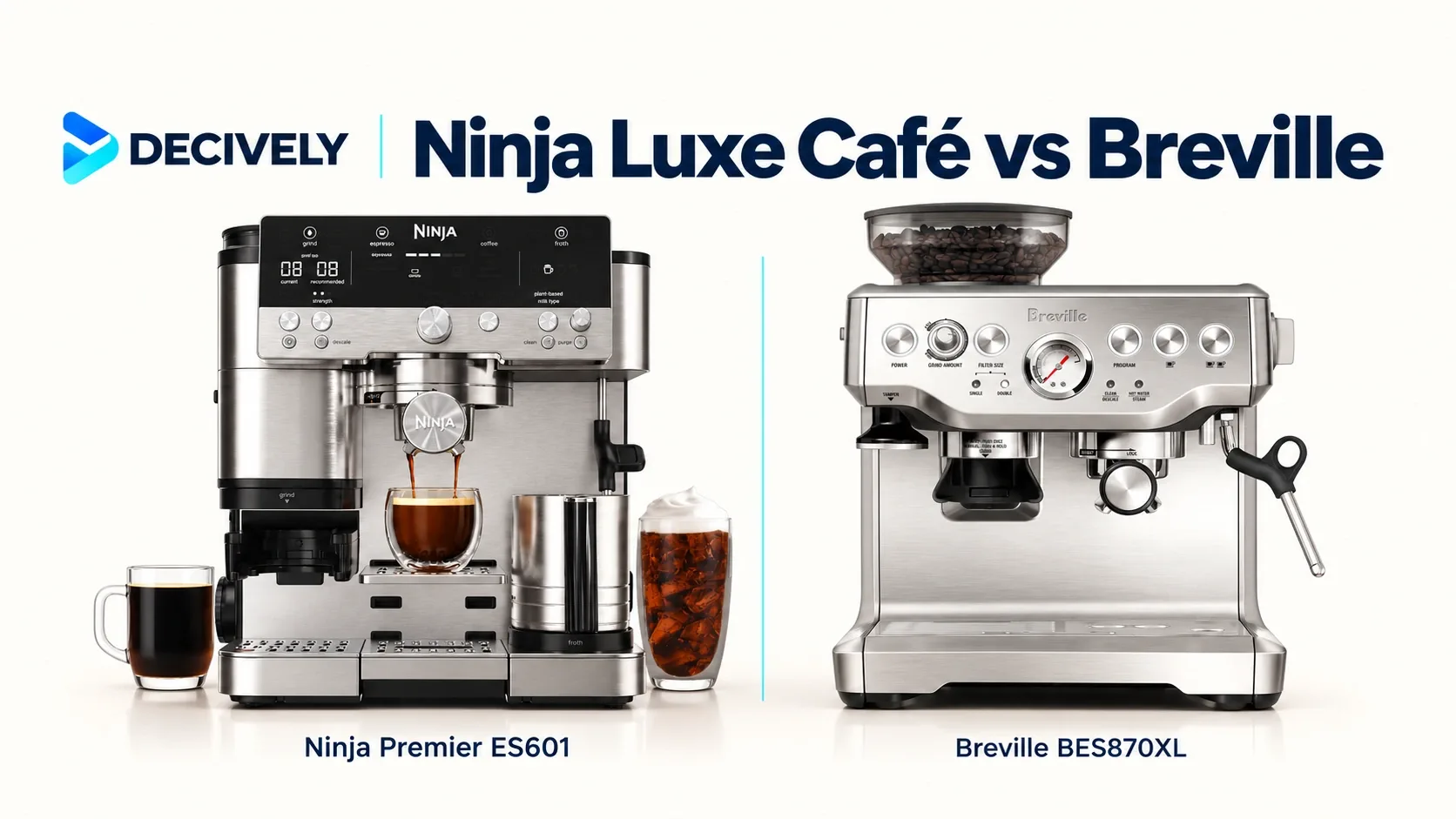
Your first espresso machine should fit the coffee you actually drink—and the effort you want to put into making it. This Ninja Luxe Café vs Breville Barista Express comparison covers the Premier ES601 and BES870XL in brushed stainless steel, the models linked below.
This is a researched buying comparison, not a Decively hands-on test. Neither machine makes a finished latte without you handling the portafilter and cleaning up.
Quick verdict: which is better for a beginner?
Choose Ninja if you want help with grind settings, measured dosing and automatic milk frothing, plus regular coffee and cold brew. Choose Breville if learning to dial in espresso and steam milk is part of the appeal. Its biggest compromise is the practice required; Ninja’s is having less of the traditional hands-on routine.
The differences that matter at home
These are manufacturer features, not a coffee-quality score. Both include a grinder. Ninja’s drip option makes individual servings, not a full carafe. This comparison excludes the Ninja Mini/Pro and Breville Express Impress, whose assistance and drink options differ.
Ninja guides the routine; Breville lets you learn it
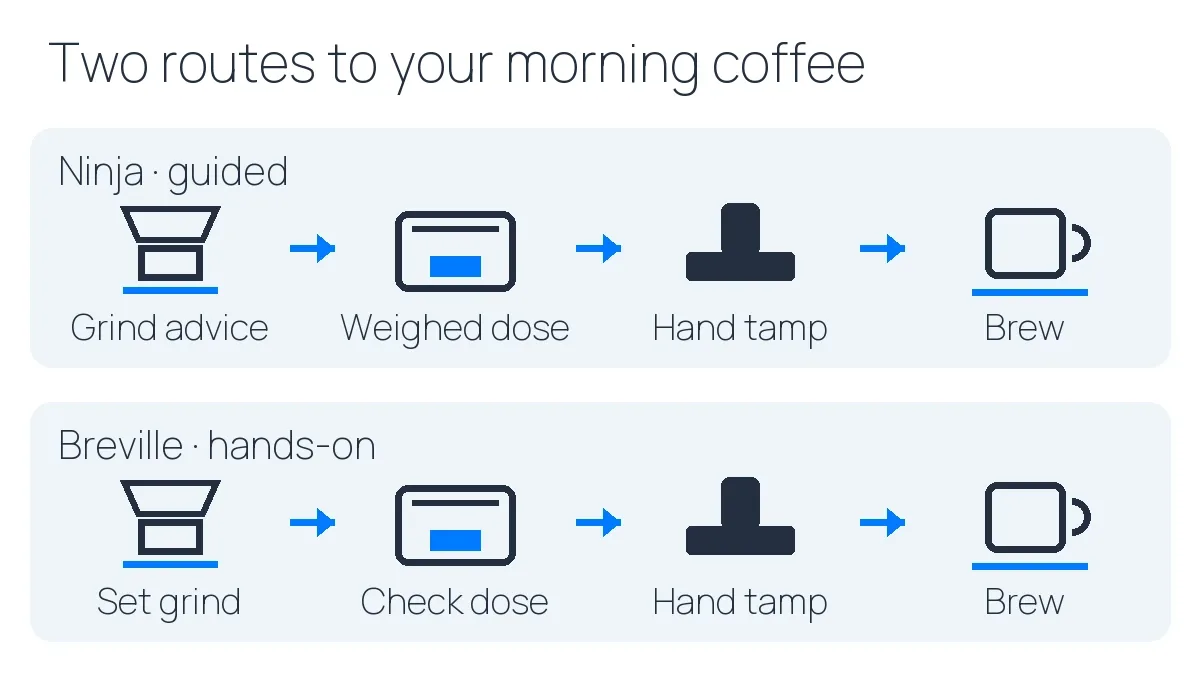
Simplified workflow. A separate scale is useful with Breville; Ninja has one built in.
The Premier’s Barista Assist recommends a grind setting, and its built-in scale measures the coffee dose. That removes two decisions from your early attempts. Its 25 grind settings do not automatically make it better than Breville’s 16: beans, adjustment range and the finished extraction matter more than the count.
Breville uses timed grinding and a manual tamper. You adjust grind and dose, then judge the result; a separate coffee scale is useful for making those adjustments repeatable. This suits someone who wants a coffee hobby, but can feel fiddly on a rushed morning.
Important: the ES601 does not have the Pro’s integrated side-lever tamper. You use the separate tamper supplied with it. The BES870XL is the original Barista Express, not the assisted-tamping Impress.
Lattes: easier frothing or more control?
Ninja’s hands-free presets include steamed milk, thin foam, thick foam and cold foam. It is the simpler choice when different people in the house want different drinks. Breville’s manual wand gives you direct control over texture, but positioning the jug and introducing air take practice.
Independent results need context. TechRadar’s Danielle Abraham found the Ninja straightforward to master and liked its automatic frothing. CoffeeGeek’s longer bench review was less impressed by its milk texture and reported excessive heat at the factory setting. Easy frothing therefore does not guarantee silky latte-art milk; settings and technique still matter.
Tom’s Guide’s Millie Fender, drawing on her Ninja review and years with the Barista Express, frames the choice similarly: guided convenience versus learning the espresso routine. These are external reviewers’ experiences, not our own.
Cleaning and counter space: check these before buying
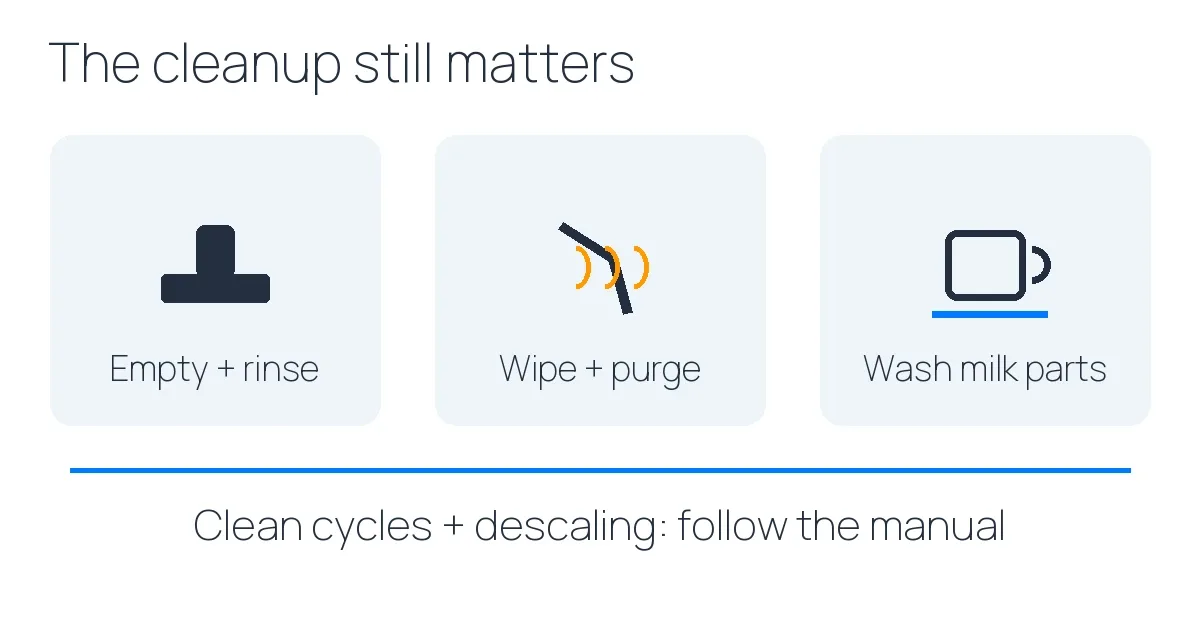
Shared chores, simplified. Ninja adds a frothing whisk; Breville uses a manual steam wand.
Automatic frothing does not mean no washing. With Ninja, clean the milk jug and whisk as well as the wand. With Breville, wipe and purge the wand promptly after steaming. For both, empty the grounds, rinse the basket and portafilter, and keep the drip tray clean. Follow each manual’s cleaning and descaling instructions for your water conditions.
Neither is a small pod machine. Measure usable counter depth, clearance above the bean hopper, and room to remove the water tank. Leave space for cups and the milk jug too. A machine that barely fits under a cupboard can still be awkward to refill.
Which one should you buy?
At a similar price, Ninja is our editorial pick for the beginner who mainly wants easy drinks. Breville is the better fit when you want to learn the process—or a meaningful discount makes its extra effort worthwhile. Neither is an automatic taste winner, and neither removes the need for fresh beans and basic upkeep.
Two final checks: Ninja’s included baskets are double and Luxe; its separately listed single basket is not part of that standard bundle. The Premier also lacks a dedicated hot-water outlet, while the Breville has one for drinks such as Americanos.
The supplied Amazon links originate from US listings and may show local matches. Confirm the model, included accessories, voltage, delivery and warranty for your country before ordering. A plug adapter alone does not resolve a voltage mismatch.
Research checked 11 October 2026. Specifications: SharkNinja ES601 product page and owner guidance; Breville BES870 product page and instruction book. Independent assessments: TechRadar, CoffeeGeek and Tom’s Guide. Product imagery: SharkNinja and Breville; composition: Decively.