
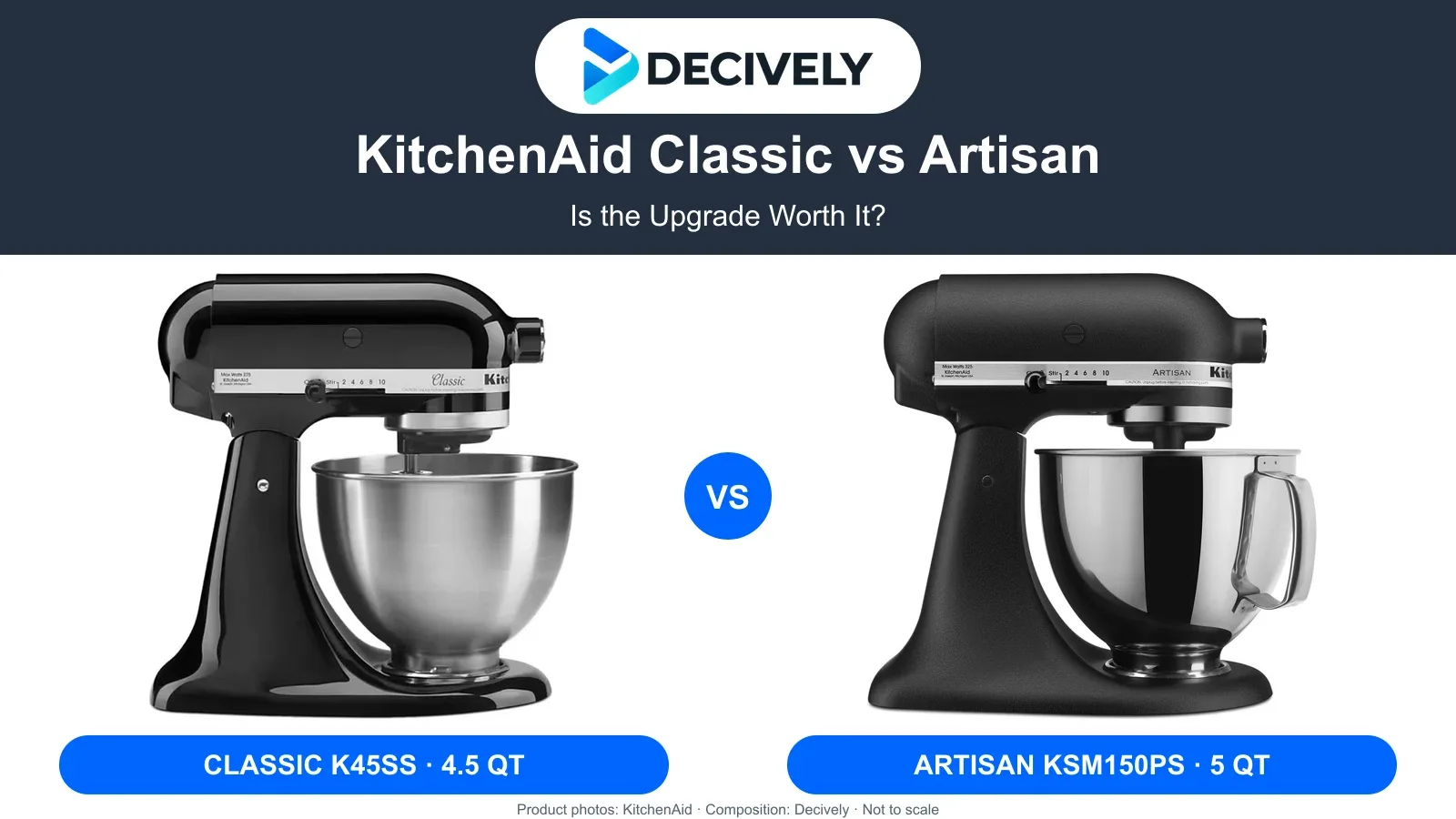
KitchenAid Classic vs Artisan comes down to whether you will use the Artisan's larger, handled bowl enough to justify its extra cost. Independent tests found similar everyday mixing results.
Quick verdict: which KitchenAid should you buy?
Buy the Classic when it is meaningfully cheaper. Its 4.5-quart bowl and three mixing tools cover ordinary home baking. Choose the Artisan when the price gap is small and you want a bowl handle, a little more capacity and the pouring shield listed in KitchenAid's current US package.
As an Amazon Associate I earn from qualifying purchases. Affiliate disclosure.
Classic vs Artisan at a glance
This comparison covers the standard 5-quart Artisan, not the Artisan Mini, Artisan Plus or a bowl-lift mixer. Pasta rollers and other hub-powered attachments are optional purchases for both.
Does the Artisan actually mix better?
In Prudent Reviews' 2026 comparison, Andrew Palermo used the same ingredients, quantities and speeds for whipped cream, chocolate-chip cookies and pizza dough. Both whipped cream in about two minutes, produced similarly baked cookies and kneaded the pizza dough successfully. Both needed bowl scraping for cookies; both showed head movement under the heavier dough load.
This is one review, not a guarantee for every recipe. It gives little reason to expect a major everyday improvement from 325 W versus 275 W. Pay for convenience you will use.
The bowl handle is the useful everyday upgrade
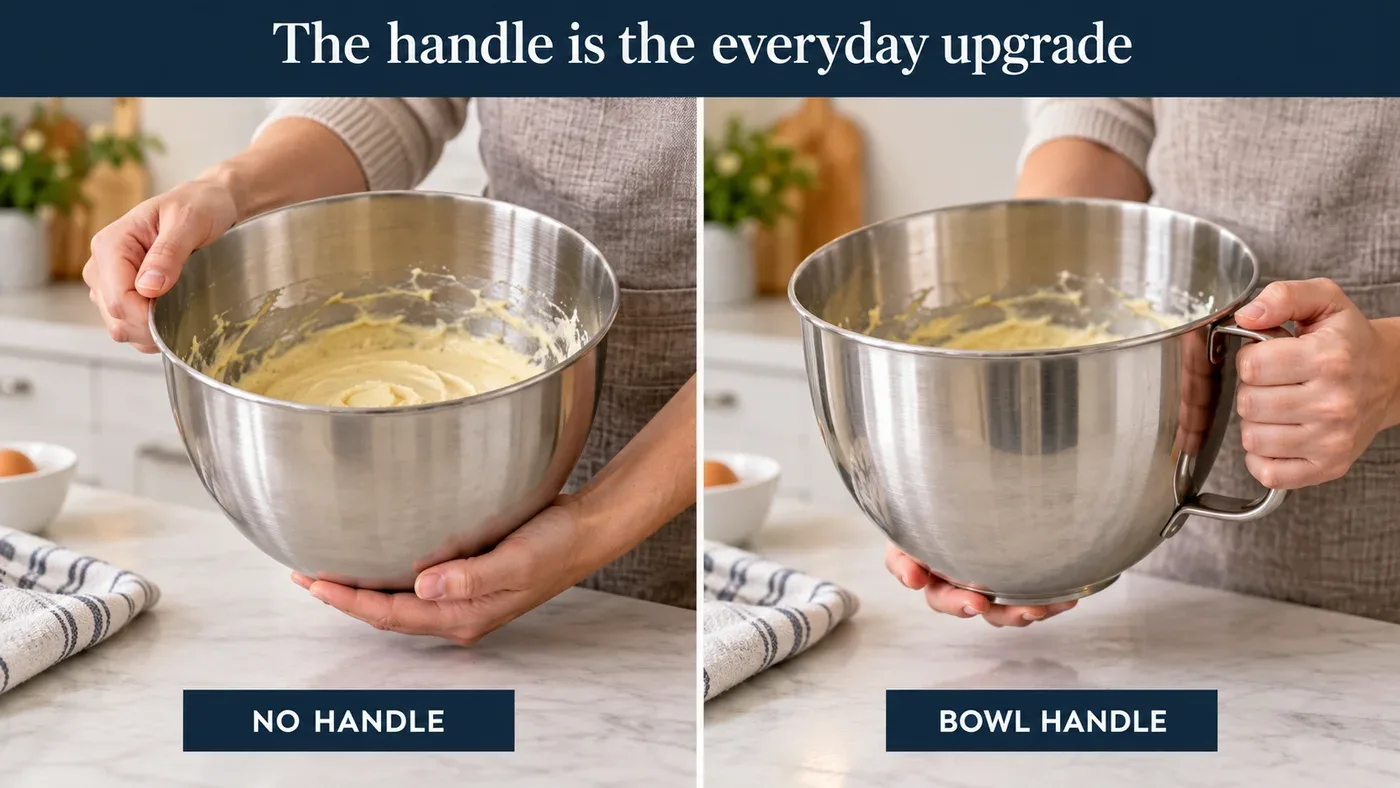
Illustration of generic bowl handling; not KitchenAid product photography or a Decively test.
The Artisan's handle helps when removing a full bowl, carrying batter to a pan or holding it while scraping. Frequent bakers may value this more than the motor specification.
The extra half-quart is modest. It gives you more headroom; it does not turn the Artisan into a high-capacity bakery mixer. KitchenAid's quoted eight-versus-nine-dozen cookie capacities use small 28 g portions, so do not assume the same counts for your own recipe.
KitchenAid currently lists a pouring shield with the KSM150PSBK. Verify the retailer's package before checkout.
When the Classic is the better buy
Choose the Classic for cakes, cookies and whipped cream when savings matter more than a handle. You get the same basic tilt-head workflow and attachment-hub versatility in Onyx Black.
Its trade-off is convenience and a slightly smaller bowl. If buying a separate handled bowl and shield would erase the savings, compare that combined cost with the Artisan before choosing. Check compatibility before ordering accessories.
When paying more for the Artisan makes sense
Choose the Artisan if you frequently move a bowl of batter, appreciate the extra headroom or prefer its Cast Iron Black finish. A small price premium is easier to justify because you will use those features during every baking session.
A large premium is harder to justify for similar mixing results. Compare current prices for the exact color, seller and included accessories; a discounted Artisan can change the decision.
Bread dough and local variants: check before buying
For occasional bread, either can make sense within its recipe limits. KitchenAid instructs kneading at speed 2; follow the supplied manual's batch and timing guidance. Frequent heavy bread batches justify examining a suitable bowl-lift model instead of assuming the Artisan's extra half-quart solves the workload.
The links identify the US Classic Onyx Black and Artisan Cast Iron Black. Amazon's local matching may redirect you to a different color or listing: the Artisan link displayed Aqua Sky in the UK during this check. Confirm model, voltage, accessories, delivery and warranty for your country before buying.
Planning homemade frozen desserts too? Our Ninja CREAMi model comparison covers a different job: processing a pre-frozen base, rather than mixing cake or bread ingredients.
KitchenAid Classic vs Artisan: common questions
Is the KitchenAid Artisan worth the extra money?
Yes, when the price gap is small and you will use its bowl handle, extra capacity and confirmed package extras. For similar everyday mixing results at a lower price, the Classic is often the more sensible purchase.
Does the Artisan come with a pouring shield?
KitchenAid's current US KSM150PS package lists one. Retailer and regional bundles can differ, so check the exact box contents rather than relying on a generic Artisan comparison.
Can the KitchenAid Classic make bread dough?
Yes, within its manual's capacity limits and using speed 2 for kneading. Occasional bread is different from repeated large batches of stiff dough; a higher motor wattage does not remove those limits.
Research notes
Researched October 13, 2026. Decively has not tested these mixers. Specifications come from KitchenAid; mixing results come from Prudent Reviews. Its general package description differs from the current KSM150PSBK listing, so verify the seller's contents.
Featured image: actual KitchenAid-hosted Classic Onyx Black and Artisan Cast Iron Black photographs; composition and approved logo: Decively. Body visual: a generated illustration of generic bowl handling, not a product photograph or test.
KitchenAid: Classic vs Artisan specifications and shared features
KitchenAid: K45SSOB Classic Onyx Black
KitchenAid: KSM150PSBK Artisan Cast Iron Black and current included accessories