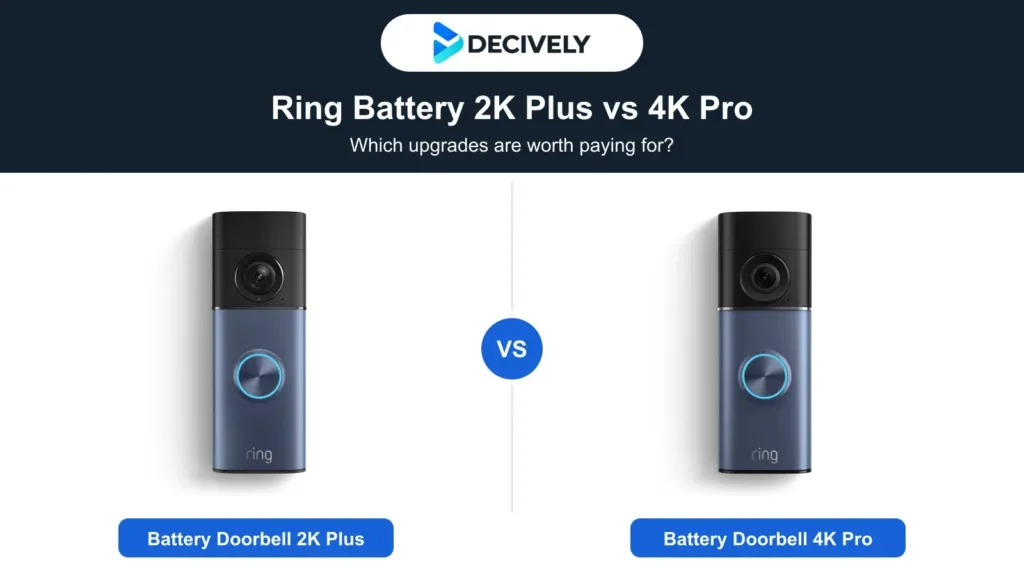

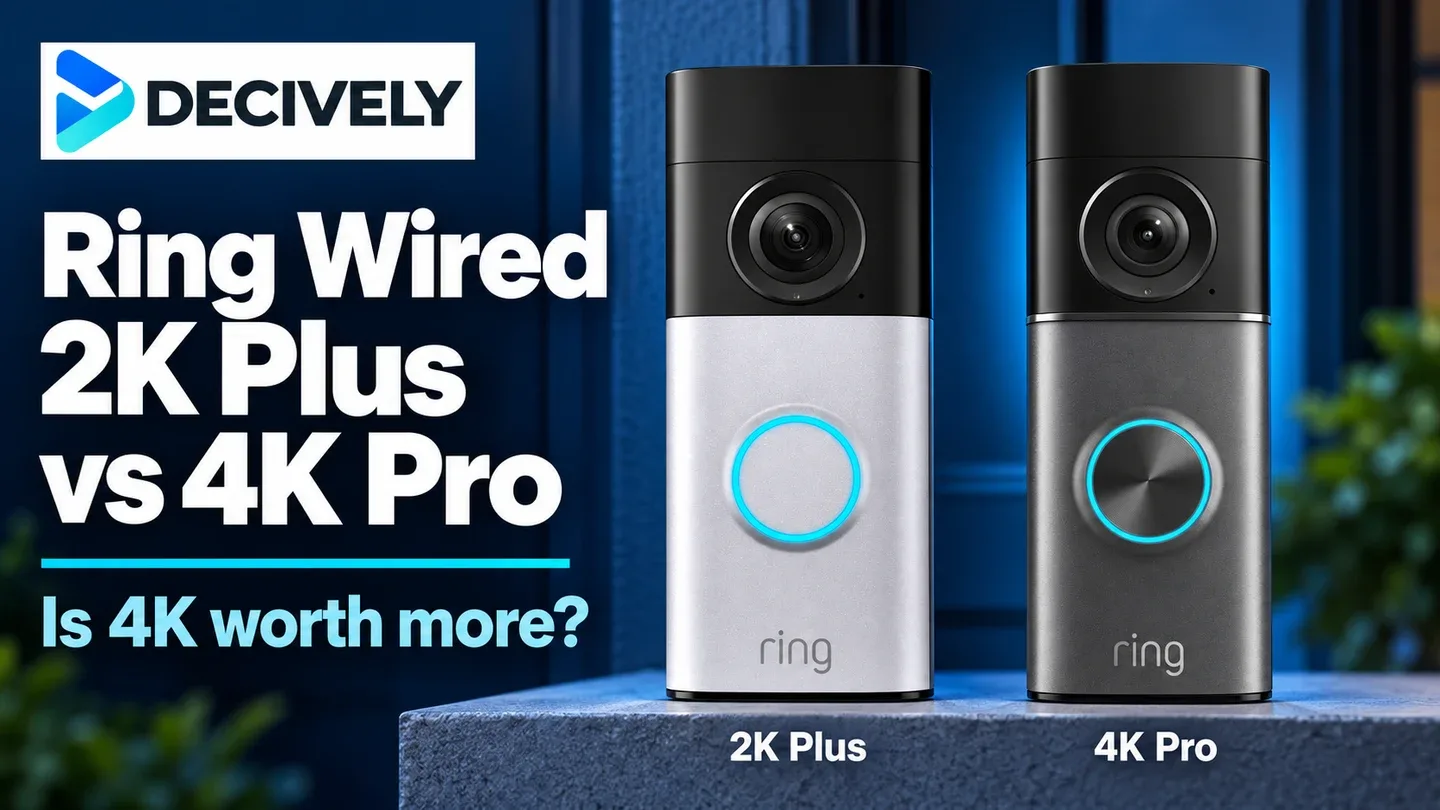
The Ring Wired Doorbell 2K Plus vs 4K Pro decision comes down to what you need to see beyond a visitor at your door. Both are wired, head-to-toe doorbells; the Pro adds detail, enhanced zoom and radar-based motion detection.
Quick verdict
Choose the 2K Plus for ordinary doorstep visits and deliveries. Pay more for the 4K Pro if you regularly crop a wider scene or want its 3D motion detection. Neither upgrade fixes unsuitable wiring or weak Wi-Fi. This comparison covers the US one-doorbell listings: Nickel Silver Plus and Deep Silver Pro.
Affiliate links. As an Amazon Associate I earn from qualifying purchases.
FOR NORMAL DOORSTEP USE
Ring Wired Doorbell 2K Plus
Nickel Silver · one wired doorbell. For checking visitors and parcels without paying for 4K. Still needs suitable power and a subscription for saved recordings.
FOR EXTRA DETAIL AND RADAR
Ring Wired Doorbell 4K Pro
Deep Silver · one wired doorbell. For cropping farther-away detail and 3D motion zones. Allow for higher upload requirements and the actual price difference.
2K Plus vs 4K Pro: the differences that matter
When does 4K actually earn the extra?
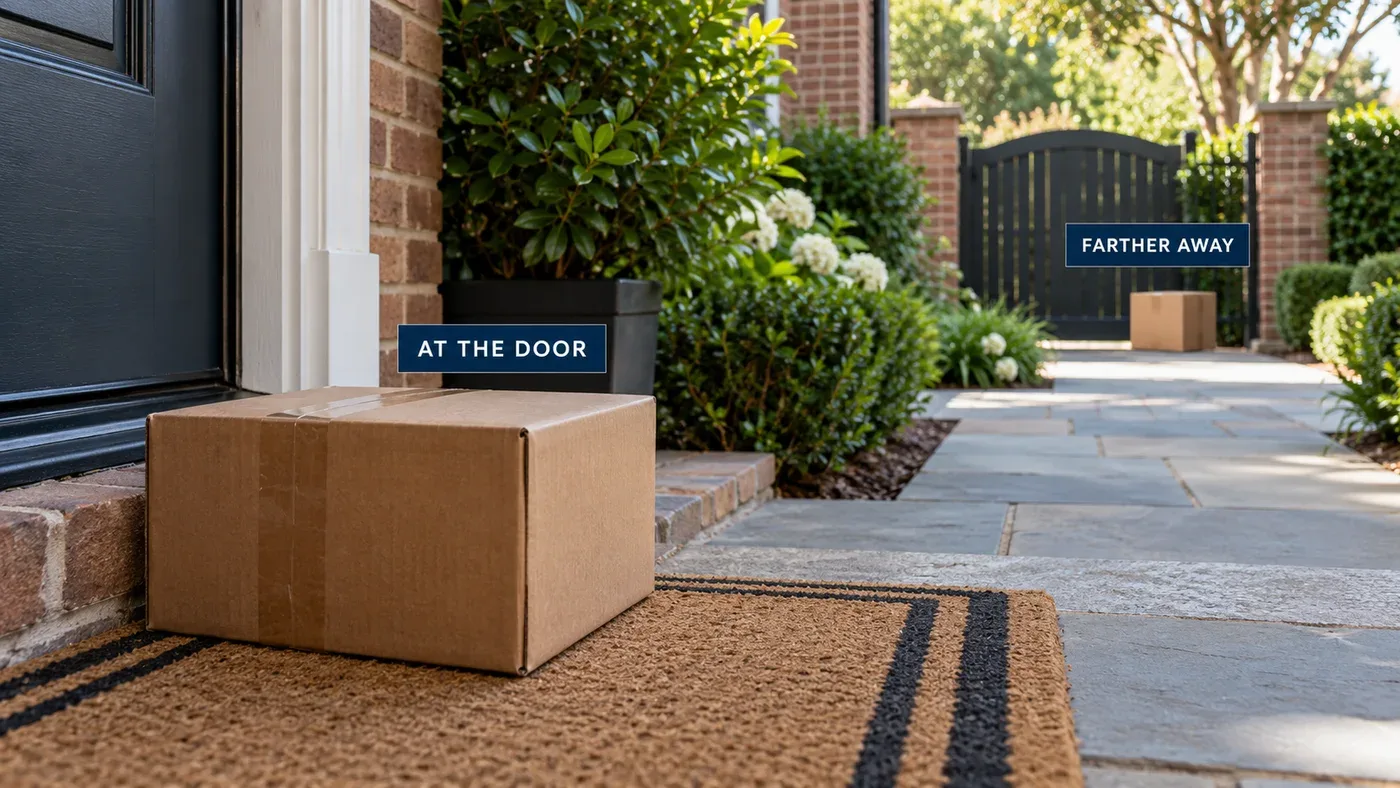
Generated editorial illustration of near and distant subjects. Not Ring footage or a measured 2K-versus-4K comparison.
Extra pixels help most when you enlarge a smaller subject in the scene. A visitor filling the doorway needs less cropping than something near a gate. Ring’s square “4K” frame is 2880 × 2880, not the 3840 × 2160 shape associated with a 4K television.
In his Tom’s Guide review, John Velasco found the third-generation wired Pro captured finer daytime detail and handled bright porch lighting better than the previous-generation Pro. That was not a controlled comparison against this 2K Plus. It supports the newer Pro’s capability, not a claim that every porch needs it.
Our buying threshold: spend more when you can name the detail you currently miss. A large sale-price gap makes the Plus more attractive; a small gap strengthens the Pro’s case.
Night vision and motion: avoid the wrong upgrade
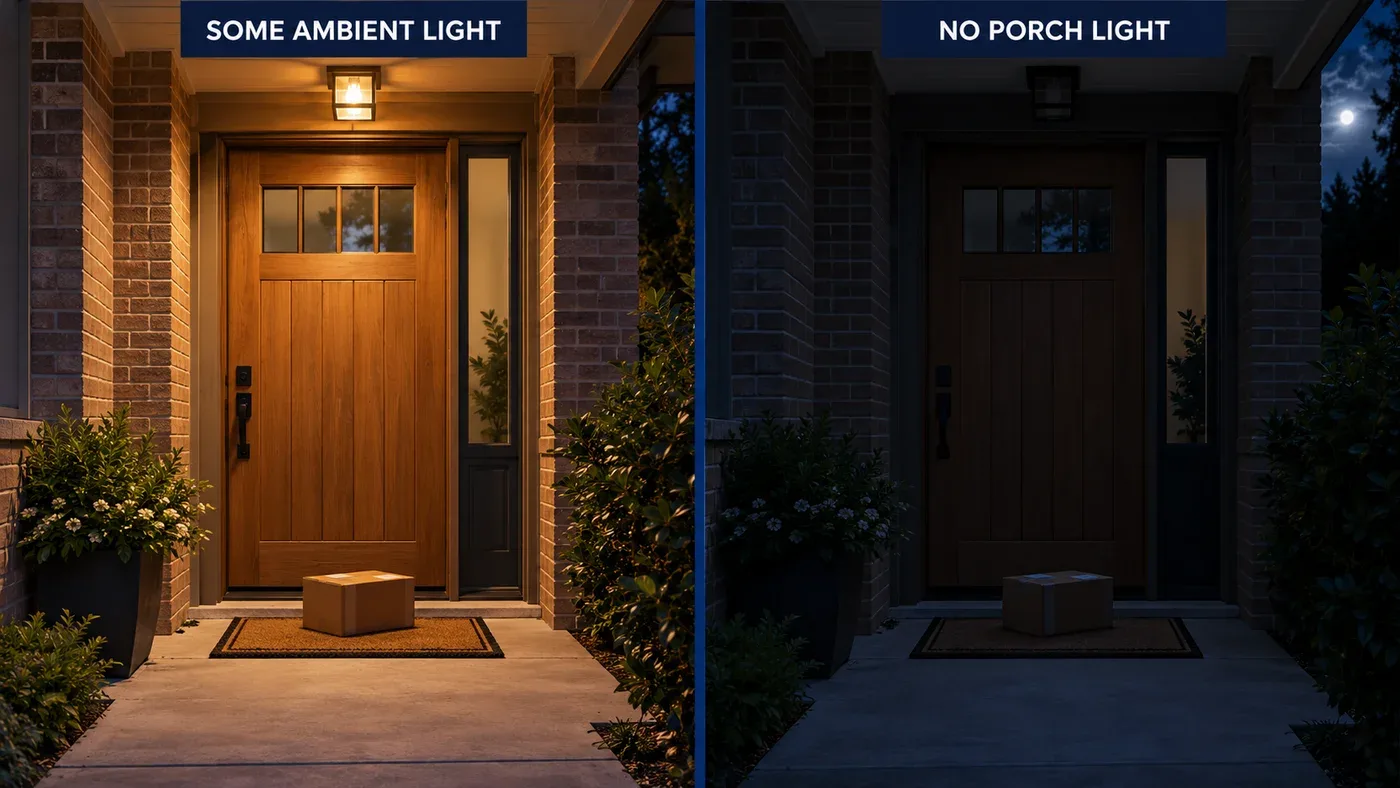
Generated illustration of porch lighting conditions, not a camera sample. Both models still depend on the scene and available light.
Ring says both models use available ambient light for color and switch to black-and-white in total darkness. The Pro’s higher resolution does not turn an unlit porch into daylight.
The stronger distinction is the Pro’s advertised radar-based 3D Motion Detection, which adds distance-aware zoning. The current Plus listing uses standard motion detection and explicitly warns that older customer reviews may mention 3D features no longer present on newer devices. Match the exact model rather than relying on an old “Plus” review.
Check power, Wi-Fi and your indoor chime first
Power: Ring’s US specifications list 16 or 24VAC, 10–40VA, with 30–40VA recommended for optimal performance, or specified compatible Ring power accessories. Have an installer verify the supply; ordinary wires at the door do not prove compatibility.
Indoor ringing: Chime Kit Mini replaces your old chime’s sound function. Ring says it cannot be used with its Plug-In Adapter; that setup needs another supported way to hear alerts indoors. Check the instructions for your exact installation.
Wi-Fi: measure upload capacity as well as signal at the doorway. A larger internet download number does not guarantee stable 4K uploads. For coverage problems, see our guide to weak Wi-Fi in one room.
UK, European, Canadian and Australian buyers should use their local Ring installation and plan pages. The linked Amazon.com variants are not a promise of local delivery, identical accessories or identical billing.
Recording costs: budget beyond the doorbell
These are Ring’s US subscription prices checked October 28, 2026, not Amazon hardware prices. Ring Home Basic is now called Ring Solo; older reviews may use the former name.
Live View and two-way conversation are the basic no-plan use case. For replaying saved motion events, budget for a compatible plan. Solo includes up to 180 days of event history and smart alerts; advanced AI services can require an add-on and have regional limits. Wired power should not be confused with guaranteed continuous recording.
Which one should you buy?
Buy the Plus if a straightforward view of visitors and deliveries is enough. Buy the Pro if extra crop detail, Audio+ or radar zoning justifies its current premium. Check both live prices before deciding.
Skip both if you need a battery-powered installation or want saved video without an ongoing cloud plan. For a separate indoor-camera decision, see our Blink Mini 4K+ comparison; it does not replace a doorbell.
Two model-name questions worth checking
Is the 4K Pro the same as Wired Doorbell Pro (3rd Gen)? Ring says the name changed, not the features. The Plus is also identified as the second-generation 2025 wired model.
Is the linked Pro a PoE model? No. This comparison uses the doorbell-wiring version, not a PoE listing or the separate Wired Doorbell 4K Elite. Do not transfer their installation instructions.
Research notes
Research checked October 28, 2026. Decively has not physically tested these doorbells. Specifications, installation and plan details come from Ring; the Pro testing observation is attributed to Tom’s Guide and concerns its older Pro comparator. Recommendations are editorial interpretation. Featured product photos: Ring Press Center, supplied in its Doorbells media download; independently placed in the Decively composition and not shown to scale. Body scenes are generated illustrations, not surveillance recordings. Exact US Amazon listings and decively-20 tagging were checked; availability varies by delivery country.
Ring — Wired Doorbell 2K Plus specifications and generation Ring — Wired Doorbell 4K Pro specifications and naming Ring — US/Canada chime compatibility Ring — Chime Kit Mini and Plug-In Adapter limitation Ring — current US plans and prices Ring — subscription name changes in 2026 Tom’s Guide / John Velasco — third-generation wired Pro testing Ring — official press photographs