
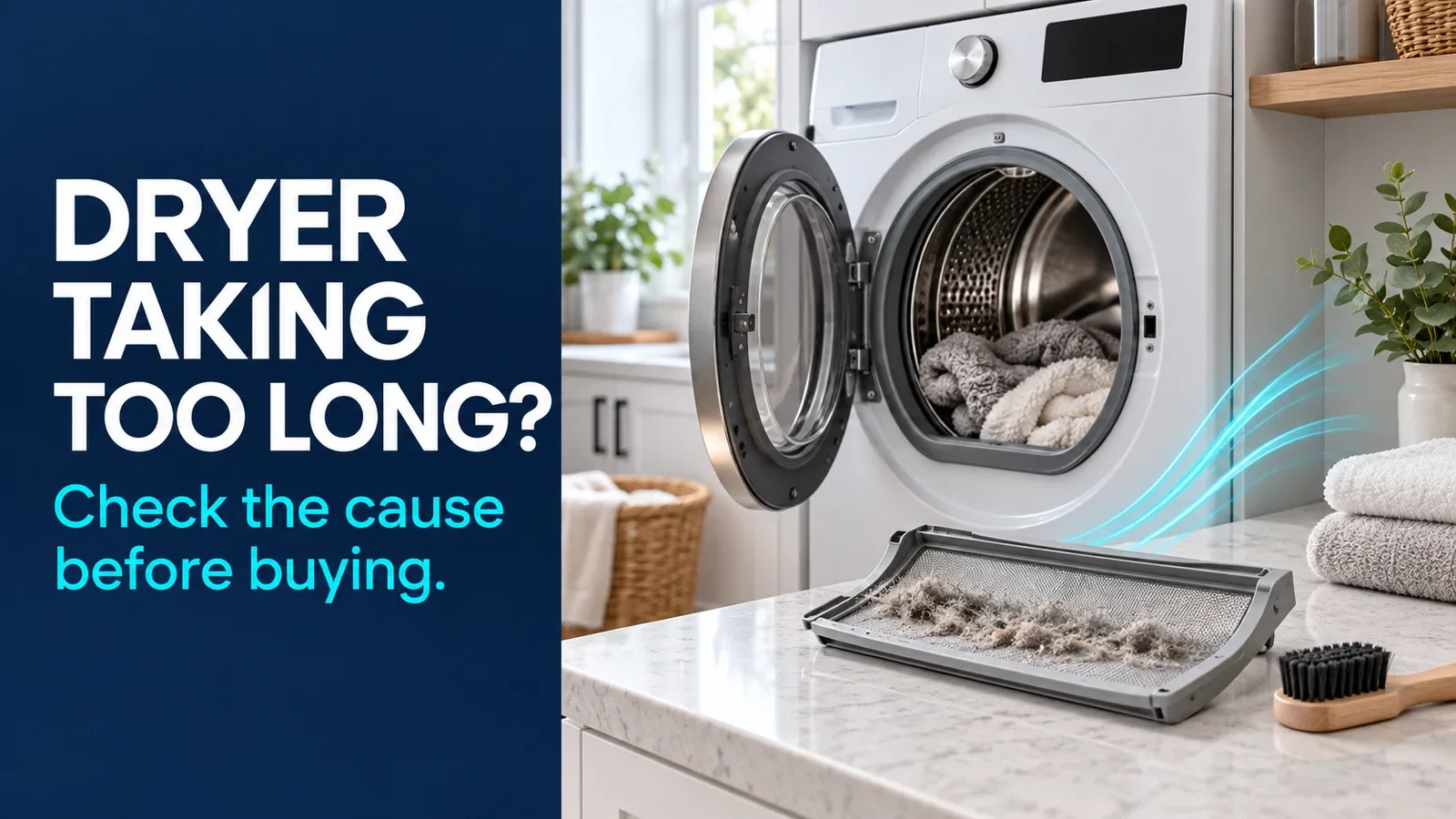
If your dryer is taking too long, buying a cleaning kit should not be the first step. Start with the load, lint screen and—on a vented dryer—the exhaust path. This guide uses manufacturer guidance and product specifications, not hands-on testing, to help you choose a suitable fix.
Dryer taking too long? Start with these free checks
Separate heavy towels from lightweight clothing and avoid packing the drum tightly. Choose the cycle and dryness level recommended for the fabrics. Clothes that leave the washer unusually wet need a washer spin-cycle check; a dryer cannot compensate efficiently for excess water.
Clean the lint screen before every load. Roll lint off by hand, and follow your manual if detergent or softener residue needs washing. Reinstall the screen only when fully dry. Check pockets and remove accessible lint without pushing tools against sensors. These basic checks may address a dryer taking too long without a purchase.
Vented or heat-pump dryer? The fix is different
A vented dryer sends warm, damp air outdoors. Restricted exhaust can leave clothes damp, extend cycles and make the appliance unusually hot. Look for a crushed visible transition duct, an obstructed accessible outdoor outlet or a check-vent warning. Follow the installation manual; do not replace approved metal ducting with plastic duct.
A ventless heat-pump dryer recirculates air and removes moisture internally. It does not need a conventional outdoor dryer-vent cleaning kit. Check the filters, water container or drain, and heat-exchanger care specified for your model. Longer cycles can be normal compared with a conventional dryer; compare with the manufacturer’s expected behavior.
What to buy for a dryer taking too long
Buy for the part you can safely access. A narrow vacuum attachment helps remove reachable lint around a suitable lint-screen opening. A rotary brush kit is for an appropriate exhaust duct, with accessible ends and instructions you can follow.
Neither tool fixes a failed heater, thermostat, moisture sensor or an electrical-supply problem. Do not buy dryer balls as a solution to a blocked vent. Before any cleaning, let the dryer cool and disconnect power as directed in its manual. Leave gas connections, internal repairs and uncertain installations to a qualified professional.
Holikme vacuum attachment: for accessible lint
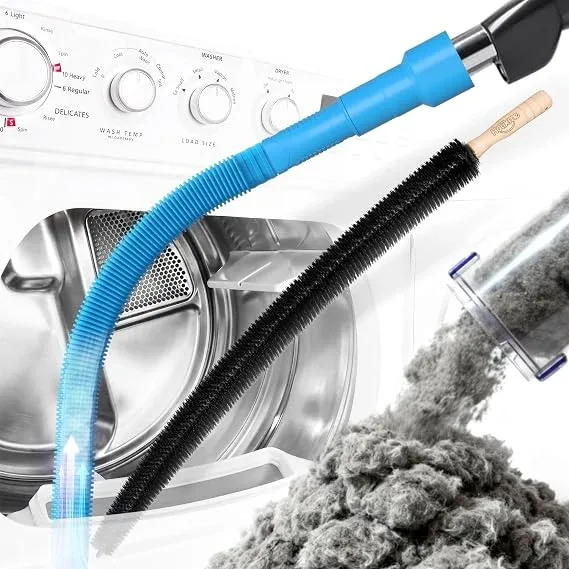
The Holikme two-piece dryer cleaning set combines a vacuum hose attachment with a flexible lint brush. It is the smaller purchase when the job is reachable lint and your vacuum is compatible.
The selected blue listing says it does not fit Dyson or cordless vacuum cleaners. Check your vacuum’s connection and the listing before ordering; do not assume “universal” compatibility. Use only where the appliance manual permits access, without forcing the hose or brush. This attachment is not a substitute for cleaning the entire exhaust run, and reachable lint alone does not establish the cause of slow drying.
Gardus LintEater RLE202: for a suitable vent duct
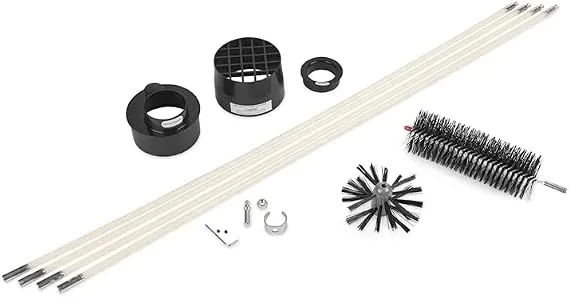
The Gardus RLE202 includes four three-foot rods, a four-inch auger brush and cleaning accessories. Its supplied rods provide up to 12 feet of reach; the drill is not included. Measure the duct route and confirm the kit suits its construction and bends before buying.
For this screw-connected kit, the manufacturer specifies forward rotation only when using a drill; reversing can separate the rods inside the duct. Follow the complete instructions rather than forcing a brush through resistance. Long, concealed, roof-exit or difficult duct runs are reasons to hire a professional. Never run a dryer with exhaust disconnected into the room.
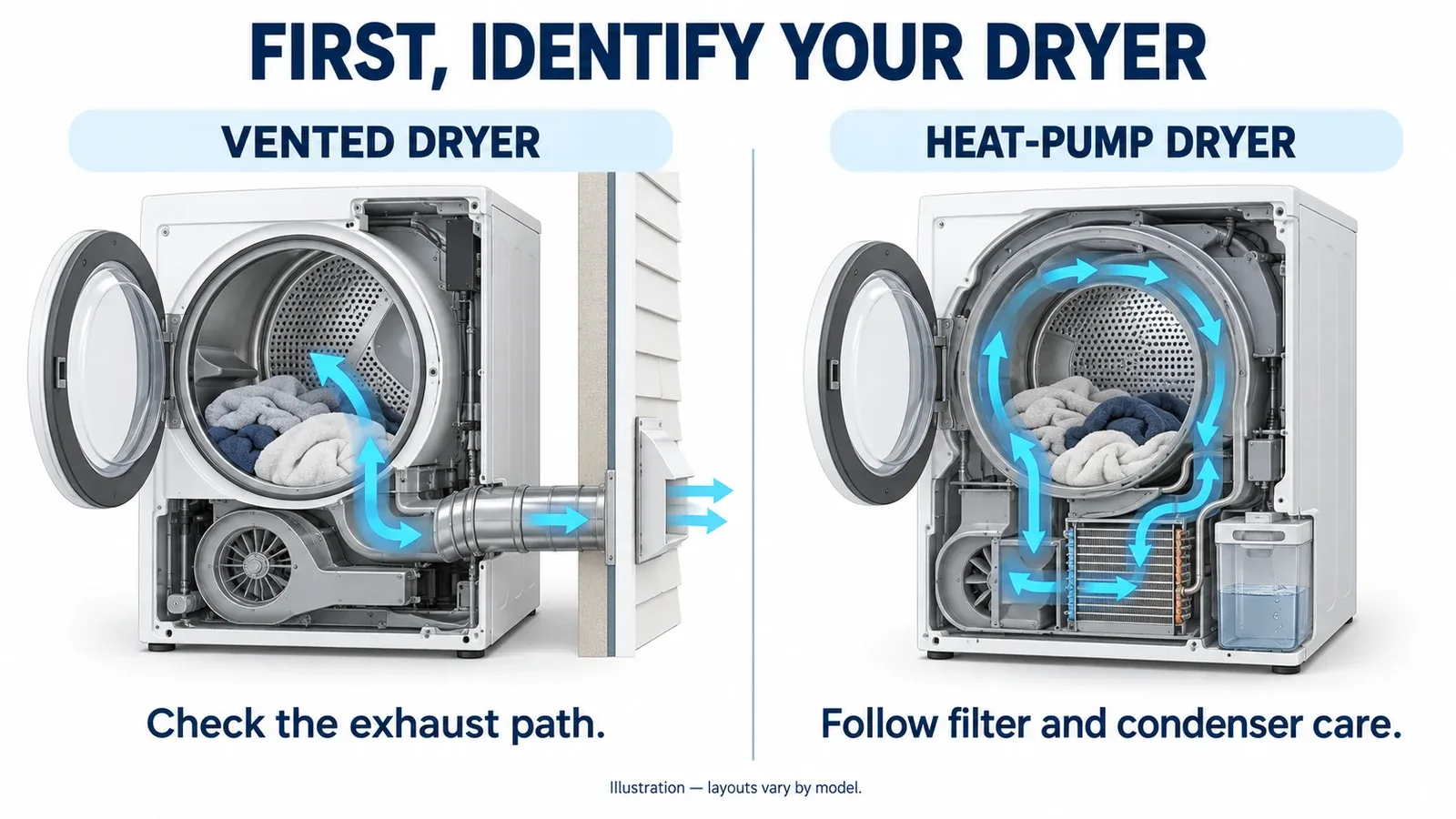
Editorial illustration: a vented dryer exhausts outdoors; a ventless heat-pump dryer needs model-specific filter and heat-exchanger care. Layouts vary.
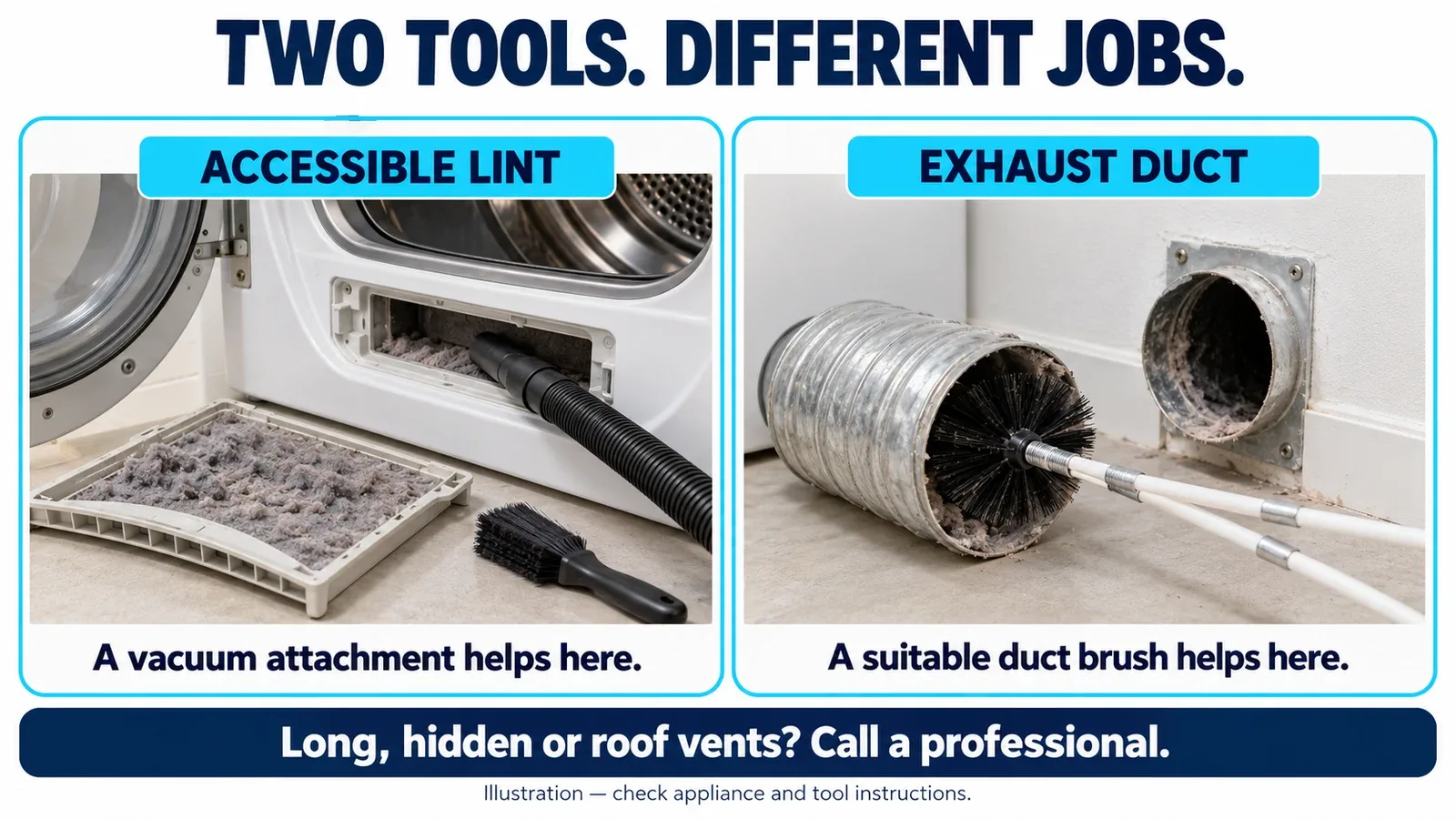
Editorial illustration: a vacuum attachment and duct brush clean different accessible areas. It is not a step-by-step procedure or a photograph of the products.
AVAILABLE ON AMAZON · AFFILIATE LINKS
Choose the tool for the accessible job.
Amazon affiliate links. Confirm your vacuum fit or duct route first. International redirects may show another kit or variant; verify the exact model and contents before buying.
When a dryer taking too long needs a professional
Stop using the dryer if there is smoke, a burning smell or unusual overheating. If you smell gas, leave the area and contact your gas utility or emergency services; do not troubleshoot a gas leak yourself.
A dryer taking too long after basic care may need an airflow inspection or appliance service. Persistent warnings, missing heat or unexplained changes in cycle behavior deserve diagnosis—not repeated purchases. Do not open electrical panels or bypass safety devices. In a rental, report the issue to the landlord before altering ductwork. A professional can check both the vent installation and the appliance rather than assuming lint is the only cause.
Dryer taking too long: your buying checklist
Start with load size, the wash spin and a clean lint screen. Identify whether your dryer is vented or ventless, then follow the correct maintenance instructions. If your dryer is taking too long because an accessible area needs cleaning, choose a compatible tool and confirm the access limits.
For the Holikme, check vacuum compatibility. For the Gardus, check duct suitability, route length and the forward-only instructions. If you cannot confidently establish those details, paying for a proper inspection is the better next step. The goal is reliable drying and safe maintenance; no accessory can guarantee a particular reduction in drying time.
AVAILABLE ON AMAZON · AFFILIATE LINKS
Check compatibility before checkout.
Amazon affiliate links. Buy only for a cleaning task you can safely perform. Confirm the model, vacuum connection, included parts and international destination.
Primary references
ENERGY STAR: dryer use and heat-pump guidance
Whirlpool: blocked or restricted dryer vents
Whirlpool: lint-screen care
Gardus RLE202: manufacturer instructions and listing
Holikme: selected listing and compatibility limits
Research and listings checked October 9, 2026. This is a research-based buying guide, not a hands-on test. Explanatory images are editorial illustrations; banner thumbnails show the selected U.S. products. Offers and international destinations can change.