
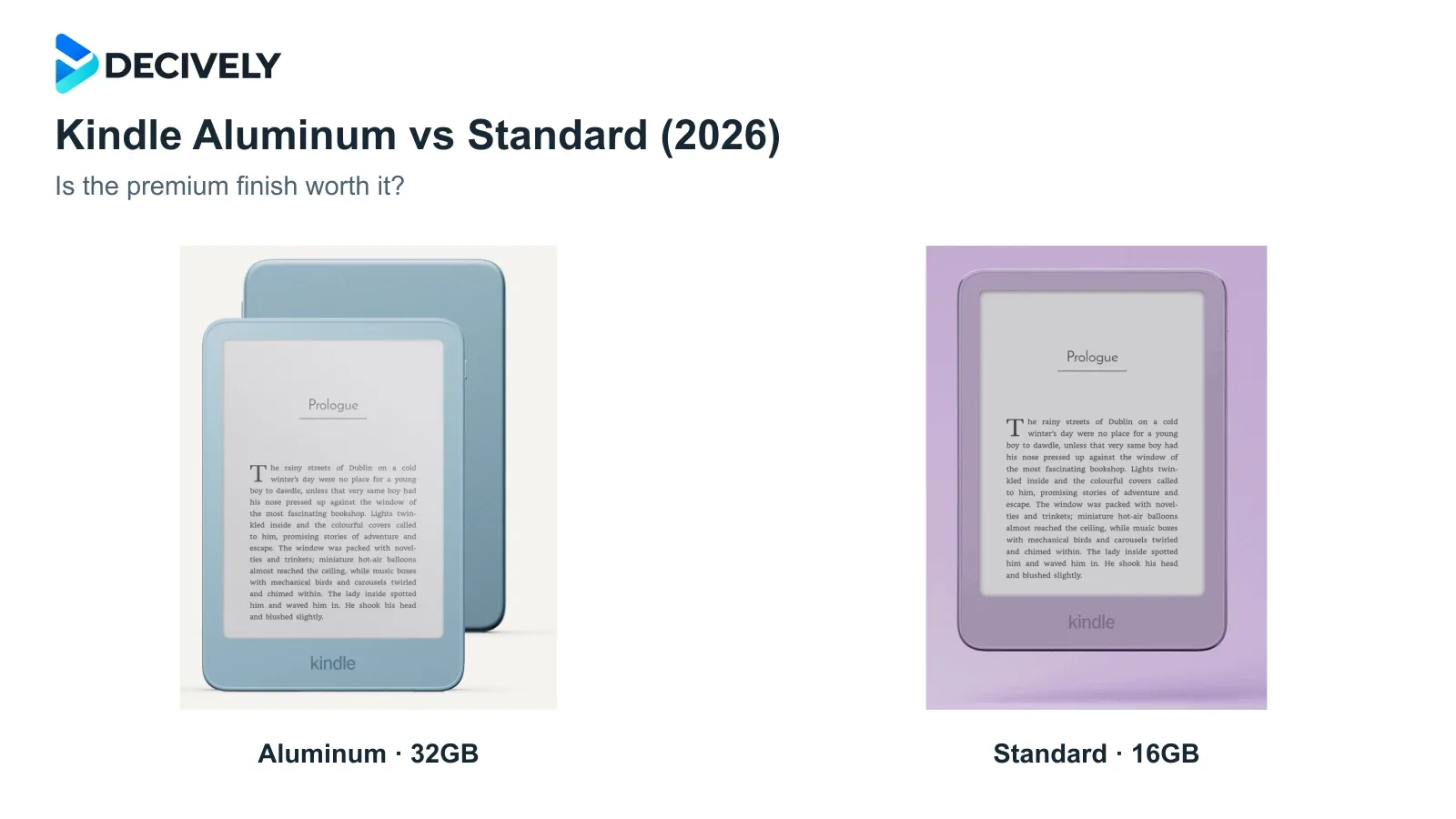
The Kindle Aluminum vs Standard choice is about the body, storage and ads—not a better class of reading screen. Amazon launched both redesigned 6-inch models on October 1, 2026. The Aluminum is appealing, but its premium buys fewer reading upgrades than the name might suggest.
Quick verdict
Choose Aluminum for the metal finish, 32GB and an ad-free US configuration. It suits someone who specifically wants a compact premium reader and compatible magnetic covers. It is heavier, and the extra money does not add warm light or waterproofing.
Choose the standard Kindle for everyday novels and lower weight. It shares the 6-inch, 300ppi reading format. Compare equivalent ad-supported or ad-free offers before judging the price gap; the US Ube link below is ad-supported.
Affiliate links. As an Amazon Associate I earn from qualifying purchases.
What changes—and what stays the same
What the Aluminum upgrade actually buys
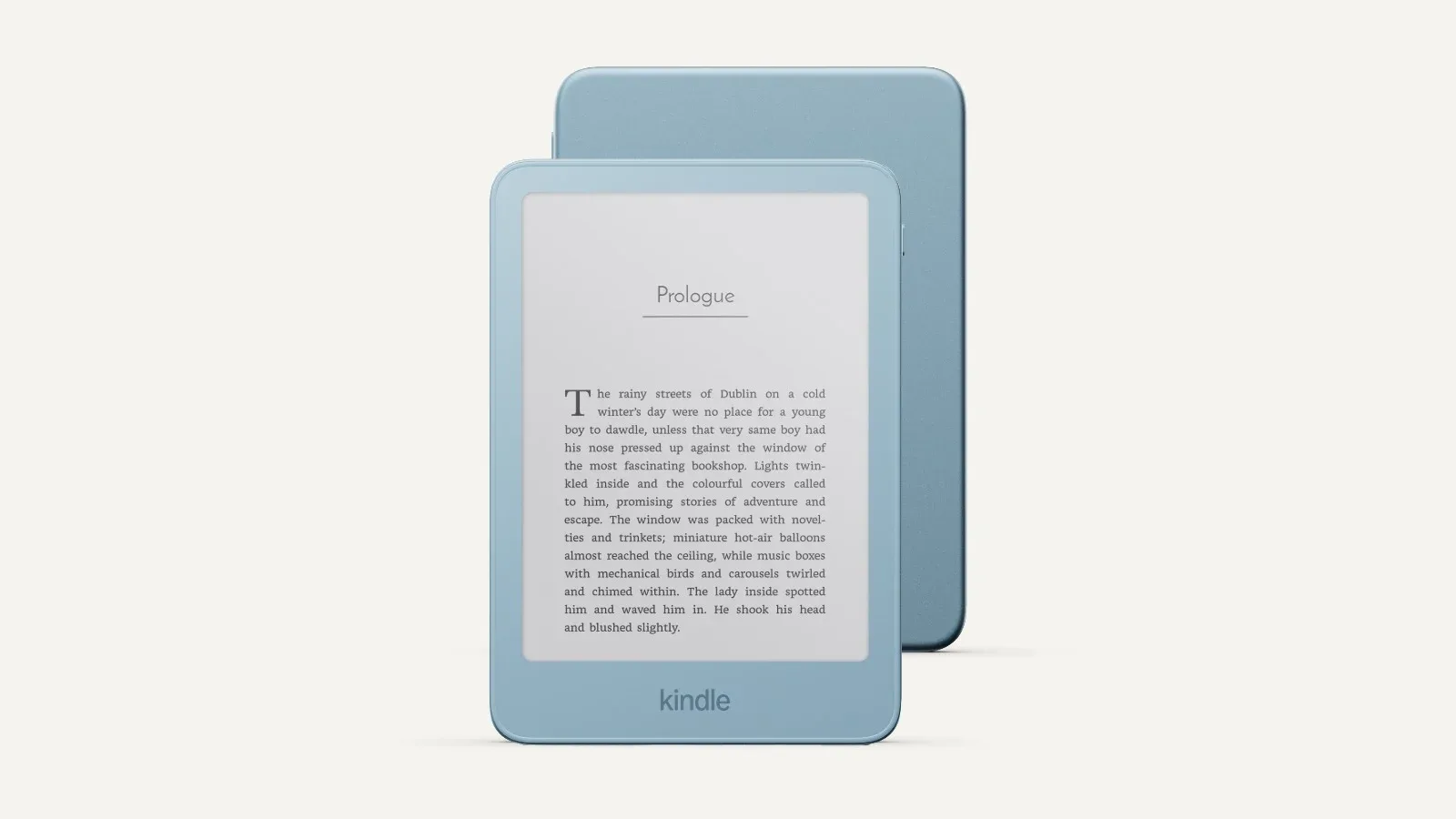
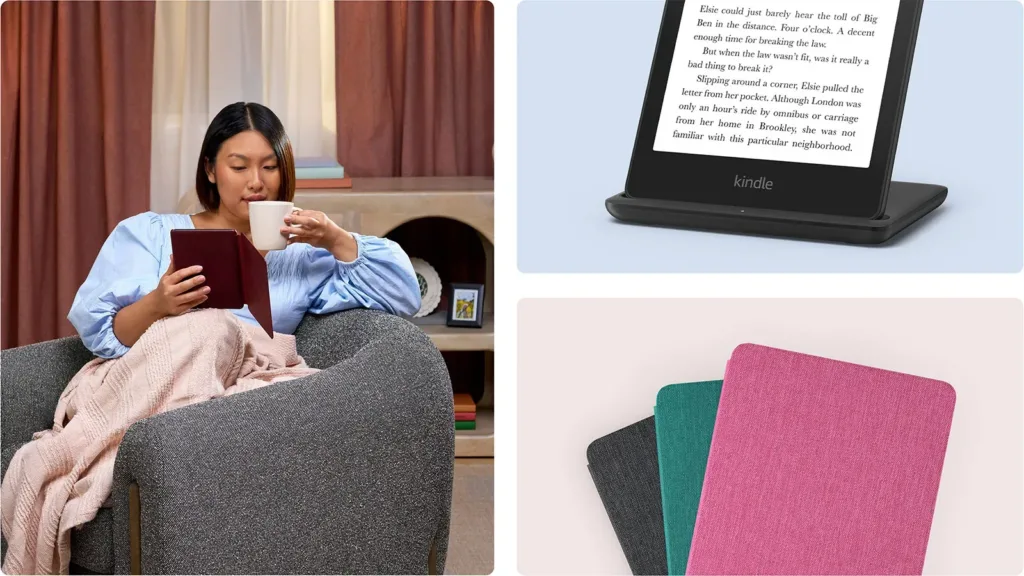
Manufacturer imagery: Amazon. Front and rear of the Alpine Sky Aluminum model; not a Decively test photograph.
The finish is the main attraction. Nathan Groezinger's purchased-unit review at The eBook Reader praised its build, describing the back as initially cool but not especially slippery. That is a firsthand impression from that reviewer, not a durability test. Aluminum adds 22g against the plastic model; a cover adds more.
Extra storage is useful if you keep a large collection of illustrated files downloaded. For someone who mostly reads novels and rotates downloads, we would prioritize comfort and the ad-free price difference over doubling capacity. The magnetic cover is a separate purchase, so include it in the budget.
The standard model is the more practical default for many readers. Its lower weight is a concrete benefit, while the metal finish is a preference. If you immediately put either reader in a substantial case, consider how much of the finish you will actually see or touch.
Both receive the new flush front and side-mounted power button. Tony Polanco's event hands-on for Tom's Guide welcomed the relocated button and preferred the feel of the aluminum versions. Those impressions support the design appeal; they do not establish longer battery life or faster reading than the standard 2026 model.
The reading compromises the premium does not fix
Neither has a warm-light slider or waterproofing. Groezinger liked the daytime frontlight but noticed a bluer appearance as ambient light faded, plus an illuminated inner-bezel line in Dark Mode on his units. Inspect your own unit at your normal night-reading brightness during the return window; this is not proof every unit has a fault.
Amazon's six-week battery claim assumes 30 minutes of reading daily, wireless off and light level 13. More reading, downloads and lighting change the result. Both need Wi-Fi and an Amazon account for setup, and the US listings say a USB-C cable is not included. Also, “edge-to-edge color” describes the colored hardware here: these are black-and-white readers, not Colorsoft models.
Should you pay more or keep your current Kindle?
Pay the premium when the compact metal design is the feature you want. Otherwise, buy the standard model at a sensible price, or keep a working reader. If warm light, water protection or a larger page matters more, compare a Paperwhite rather than assuming Aluminum supplies those upgrades.
Amazon launched both in the US, UK, Canada, Australia and selected European markets. Check local ads, book-service availability, seller and delivery terms; these links target US offers and local matching may substitute a variant. For broader context, see our color e-paper and digital-notebook guide. Our Paperwhite Signature guide covers the older 2024 model, not the newly announced 2026 Signature.
Research notes
Researched October 18, 2026. Decively has not tested these Kindles. Specifications and availability are Amazon information; independent impressions are attributed to The eBook Reader and Tom's Guide. The six-week figure is a manufacturer claim, not measured Decively battery life. No long-term durability verdict is implied.
Amazon — October 2026 Kindle launch and regional availability Amazon — Aluminum US specifications and battery-test conditions Amazon — standard Ube US configuration and comparison table The eBook Reader — purchased-unit Aluminum review Tom's Guide — firsthand launch-event impressions