


Quick verdict
To stop cold air coming through windows, match the fix to the source: weatherstripping for an opening sash, caulking for small fixed gaps, and interior shrink film for a seasonal barrier. Buying the thickest seal is not automatically the answer; the window must still close and latch properly.
This is a research-based buying guide, not a hands-on product test. We checked official guidance and U.S. listings on October 4, 2026. As an Amazon Associate, Decively earns from qualifying purchases.
Find the draft before buying anything
Close and latch the window. On a cool, windy day, move your hand or a lightweight tissue around the edges, meeting rails and trim. Localized airflow points toward a leak; this simple check is only a clue, not a professional airtightness test.
Drafty windows can also feel cold without leaking. Room air cools beside the glass and sinks, creating a chilly current. Weatherstripping cannot turn poorly insulating glass into a high-performance window. That distinction matters before you spend money.
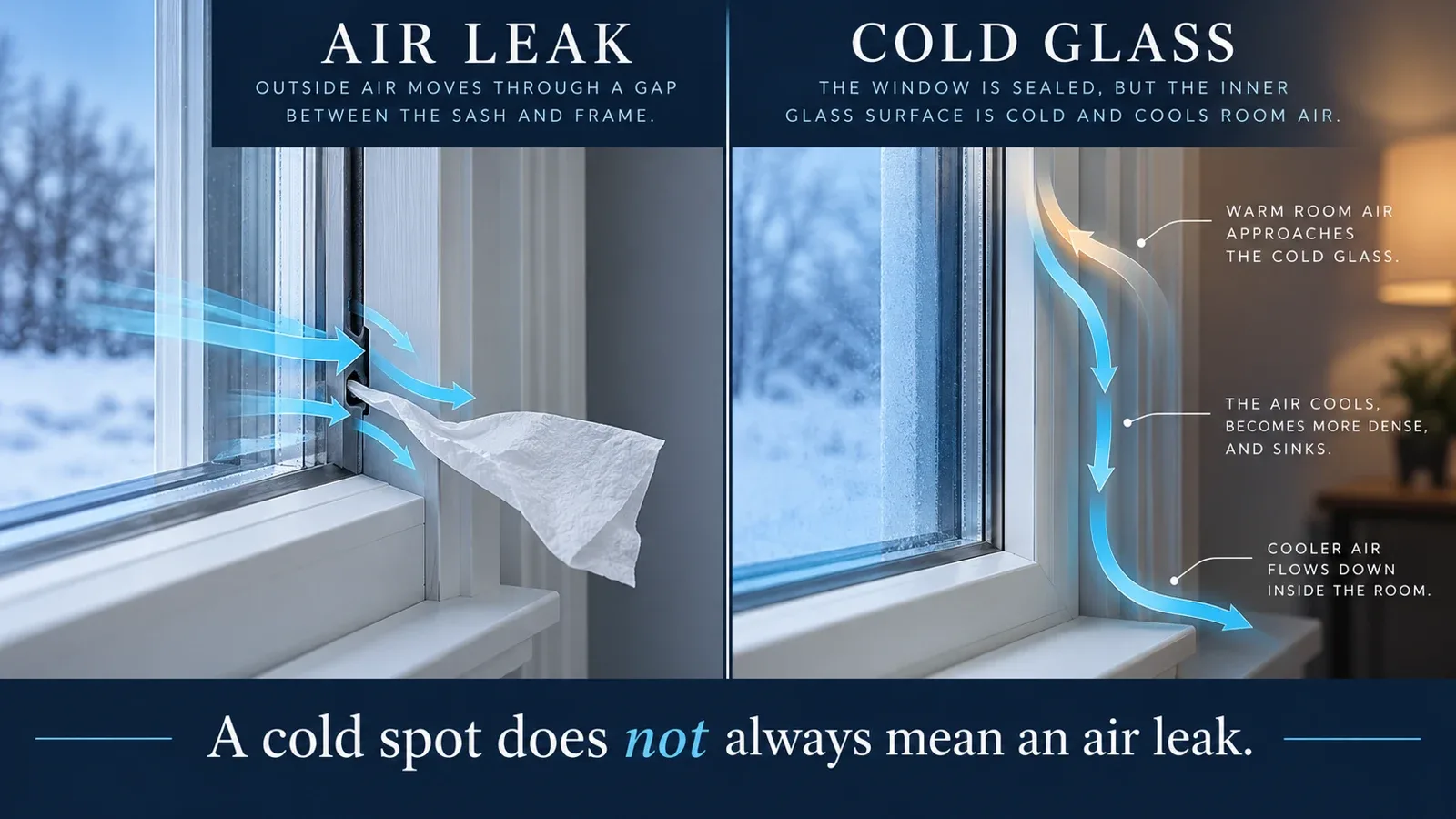
Conceptual illustration: air leakage and cold-glass convection are different problems.
What to buy to stop cold air coming through windows
Start with one targeted fix. These three products address different kinds of window drafts; they are not a ranked list, and you probably do not need all three. Measure first, then check the current listing and installation instructions.
Duck indoor shrink film kit: a seasonal barrier
The Duck 286217 kit supplies a 62-by-210-inch sheet of clear shrink film and mounting tape. It is a sensible shortlist for a window you can leave covered during cold weather.
Film attaches around the interior perimeter, creating an air layer in front of the glass. Clean the recommended surface, apply the tape and film, then use a hair dryer as directed. It restricts normal window access, and tape can affect fragile finishes. Do not cover a required emergency escape window.
Duck heavy-duty weatherstrip: a closing-joint seal
Duck 282439 is a self-adhesive EPDM rubber seal measuring 3/8 inch wide by 1/4 inch thick, with 17 feet supplied. Consider it only where that profile suits the closing joint.
For drafty windows with worn original seals, a matching replacement profile may be the better purchase. Do not fill sliding tracks indiscriminately or force an oversized strip into place. After fitting, confirm that the sash moves, closes and locks without extra pressure.
Frost King Mortite B2: small fixed gaps
Mortite B2 is gray fingertip caulking cord supplied in a 90-foot length. Its pliable, non-hardening material can be pressed into suitable small gaps without a caulking gun.
It is useful as a targeted sealing option around fixed joints, rather than a substitute for the proper weatherstrip on a moving sash. Inspect the finish and follow the label. Large openings, wet joints and damaged frames need an appropriate repair, not progressively thicker layers of cord.
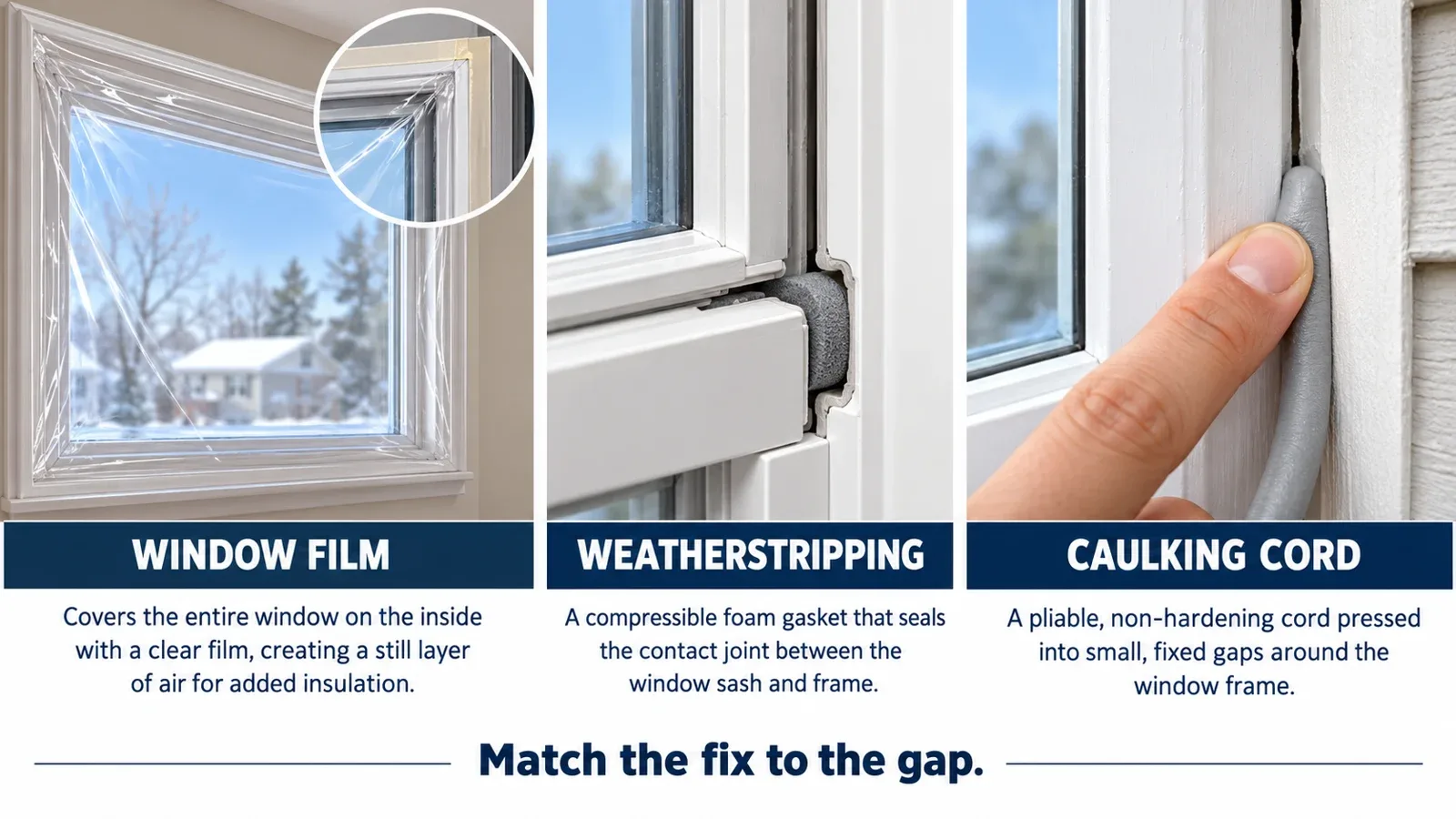
Illustrations show solution types, not photographs of the linked products. The featured Duck weatherstrip is EPDM rubber; the diagram shows a generic foam seal.
Shortlist the fix, not the bundle
For window drafts around a suitable closing joint, compare the seal profile first. For a window that stays shut through winter, measure the entire area the film must cover, allowing for its mounting perimeter.
Before installation: five checks that matter
- Size: measure the gap and the mounting area; do not rely on the advertised window count.
- Surface: clean and dry it, then check adhesive compatibility. Renters should confirm permission first.
- Operation: keep latches, sliding mechanisms and emergency exits usable.
- Drainage: leave weep holes and intentional ventilation openings clear.
- Moisture: investigate persistent condensation, staining or rot rather than concealing it.
To stop cold air coming through windows reliably, installation quality matters as much as the package. Curtains can improve comfort around cold glass, but they do not seal a leaking joint. Keep heating outlets clear and monitor moisture behind coverings.
When window drafts need a repair
A sash that will not latch, broken hardware, rotting wood or water entering the frame calls for repair advice. If the room stays cold after obvious leaks are addressed, consider a home energy assessment; the cause may be elsewhere in the building.
The practical way to stop cold air coming through windows is to diagnose, measure, apply the appropriate fix and recheck on another windy day. Buy only what solves the identified problem.
Primary references
Official guidance and manufacturer information inform this guide. The illustrations are explanatory; they do not document a product test. Prices, availability and retailer destinations can vary by location.
U.S. Department of Energy — air-sealing guidance Natural Resources Canada — heat transfer and cold-window convection Duck Brand — window insulation and weatherstrip solutions Frost King — Mortite caulking cord specifications