

What size dehumidifier do I need? Start with the room’s area and measured humidity. A moderately damp bedroom and a basement where laundry dries can need different capacities, even with the same floor space.
For many ordinary damp rooms, a 20–30-pint compressor unit is a sensible starting shortlist. More persistent moisture can justify 35–50 pints per day. Drainage, operating temperature and noise can change the better purchase.
This is a research-based buying guide, not a hands-on comparison. Manufacturer documentation and the selected Amazon listings were checked October 10, 2026. As an Amazon Associate, Decively earns from qualifying purchases.
What size dehumidifier do I need? Measure these first
Area: Multiply length by width. A 12-by-12-foot room is 144 square feet, about 13.4 square meters. Include connected space you actually expect the appliance to dry.
Humidity: Use a hygrometer for several readings over a typical day. Keep it away from the appliance’s warm exhaust. Note whether humidity rises after showers, drying laundry or wet weather.
Temperature: Record the room’s temperature too. An unheated basement can be a poor match for a model chosen only by its advertised coverage.
EPA advises keeping indoor relative humidity below 60%, ideally 30–50%. Around 45–50% is a reasonable initial setting for many rooms; colder windows may require a lower level. Fix leaks and moisture sources first.
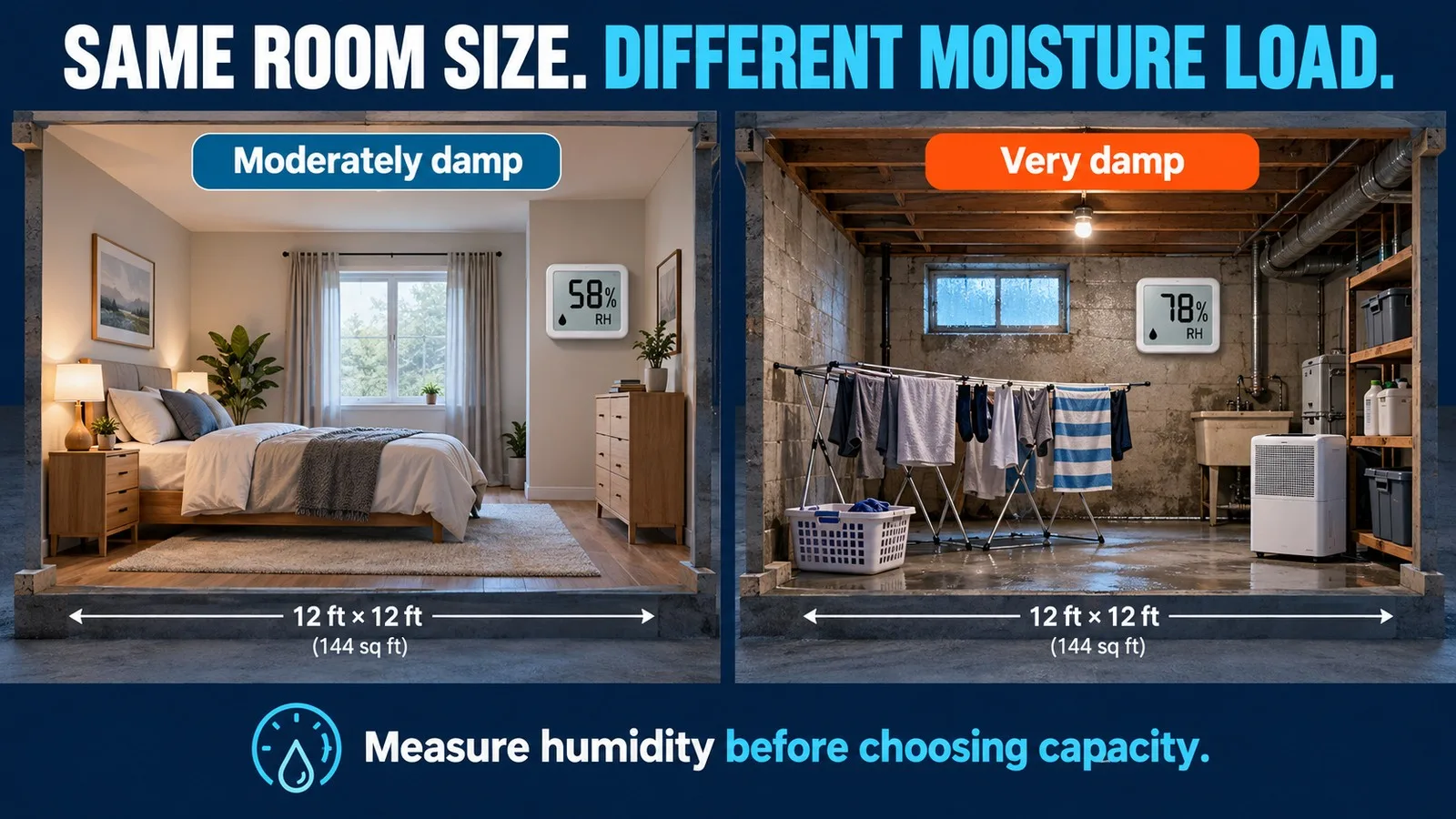
Illustration: equal floor area does not mean equal moisture load. The readings are examples, not performance measurements.
Use this dehumidifier size chart as a starting point
ENERGY STAR’s broad sizing bands combine dampness and area. Its under-2,000-square-foot category is broad: do not interpret it as proof that one appliance can dry every room across a house.
The overlapping ranges are intentional. Choose toward the higher end when moisture is persistent, then monitor the result. Standing water, recurring seepage or damaged materials need attention to the source.
If you are asking “what size dehumidifier do I need?” because a room stays damp despite ventilation, these ranges help you shortlist capacity; they do not diagnose the building.
Pints per day, liters per day and tank size
Daily capacity is water removal under specified test conditions. Tank capacity determines how much water the bucket holds before you empty it. A bigger bucket does not automatically remove moisture faster.
A 22-pint daily rating converts to about 10.4 liters; 35 pints to 16.6 liters; 50 pints to 23.7 liters. These are unit conversions, not promises about the water collected in your home.
US portable ratings changed to testing at 65°F rather than 80°F. European liters-per-day claims can use different temperatures and humidity. Compare the stated test conditions before treating two numbers as equivalent.
What to buy after choosing your dehumidifier size
To answer “what size dehumidifier do I need?” with a practical shortlist, these three Midea examples cover different ownership needs. They are not a ranking of every brand or a claim that one is best at every price.
1. Midea 22-pint: a lighter moisture load
Shortlist the selected 22-pint listing for a moderately damp room when you want a conventional bucket and optional continuous gravity drainage. Its daily rating fits the lower capacity band. Check noise and floor space before buying a dehumidifier for a bedroom; compressor operation is not silent.
2. Midea Cube 35-pint: fewer bucket trips
The Cube adds capacity and a larger removable bucket. Its 35-pint version offers Wi-Fi control and gravity drainage, without a built-in pump. Consider it when emptying a small tank would be inconvenient. A full bucket is heavier to carry, and the extended operating footprint needs space.
3. Midea 50-pint with pump: an elevated drain
The selected 50-pint pump version suits a higher moisture load where water must reach a suitable drain above the appliance’s gravity outlet. The pump is the practical upgrade. Confirm hose routing and the manual’s lift limits; the similarly named non-pump variant will not do this job.
Our answer to “what size dehumidifier do I need?” changes with the moisture load. Buying 50 pints just for an app makes less sense than buying the capacity and drainage your room requires.
AVAILABLE ON AMAZON · AFFILIATE LINKS
Compare the capacity and drainage you need
Check the selected capacity, pump option, voltage, seller and return terms. International links may show local matches; verify the specifications again.
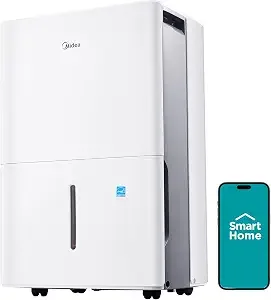
Midea 22-pint — lighter moisture load
Check options on Amazon →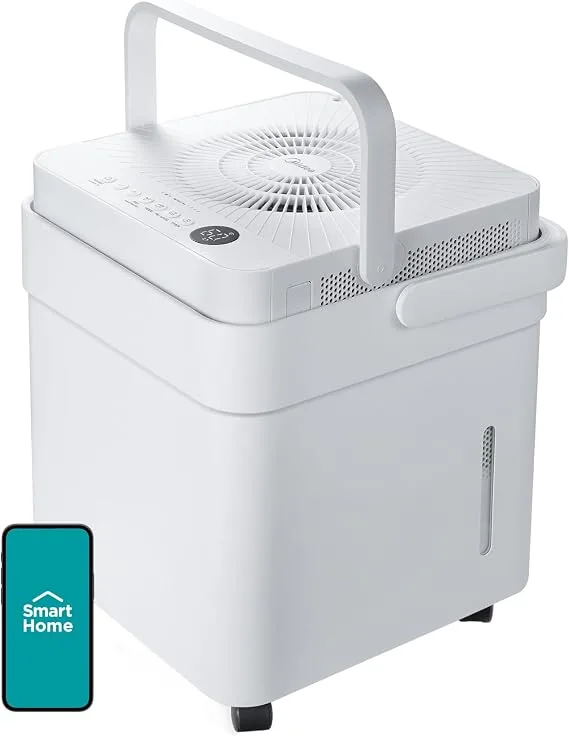
Midea Cube 35-pint — fewer bucket trips
Check options on Amazon →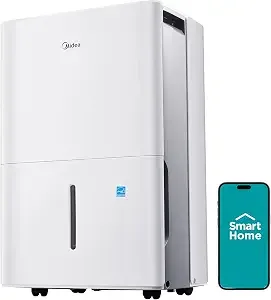
Midea 50-pint with pump — elevated drainage
Check options on Amazon →As an Amazon Associate, Decively earns from qualifying purchases, at no additional cost to you.
Bucket, gravity drain or pump?
Bucket: Empty it regularly; a full-tank shutoff interrupts operation. Gravity: Run the hose downhill to a suitable drain. Pump: Use the specified hose to lift water within the model’s limits.
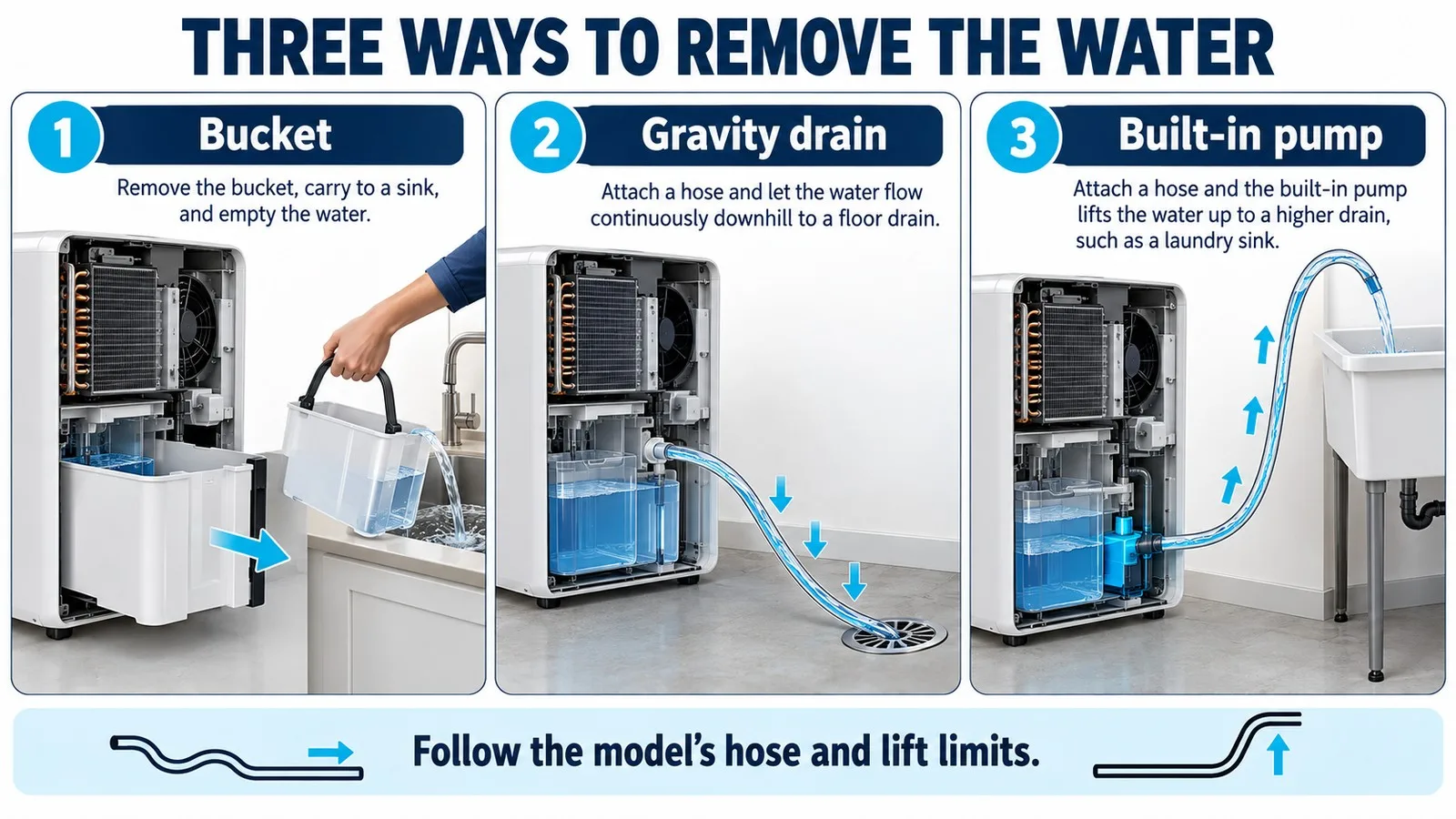
Concept illustration, not instructions to open an appliance. Follow the manufacturer’s drainage and electrical-safety guidance.
Leave the required intake and exhaust clearance. Close windows while dehumidifying, clean the filter and check the hose for kinks. If the room is below 65°F, verify suitability for lower-temperature operation instead of relying on an auto-defrost label alone.
Before buying in Europe or the US
The linked US listings are 115V appliances. European buyers should choose a locally supported model with the correct mains rating, plug and warranty. A local Amazon match may be a different capacity or version; confirm its specifications.
What size dehumidifier do I need? The practical answer
Measure first, choose capacity for the actual moisture load, then decide how to drain it. Check power consumption and comparable efficiency ratings alongside purchase price.
If humidity remains high, check drainage, airflow, temperature and ongoing moisture sources before simply buying a bigger unit. A portable appliance does not repair leaks or replace mold cleanup.
AVAILABLE ON AMAZON · AFFILIATE LINKS
Choose for your room and your drain
Check the selected capacity, pump option, voltage, seller and return terms. International links may show local matches; verify the specifications again.
Midea 22-pint — lighter moisture load
Check options on Amazon → Midea Cube 35-pint — fewer bucket trips
Check options on Amazon → Midea 50-pint with pump — elevated drainage
Check options on Amazon →As an Amazon Associate, Decively earns from qualifying purchases, at no additional cost to you.