
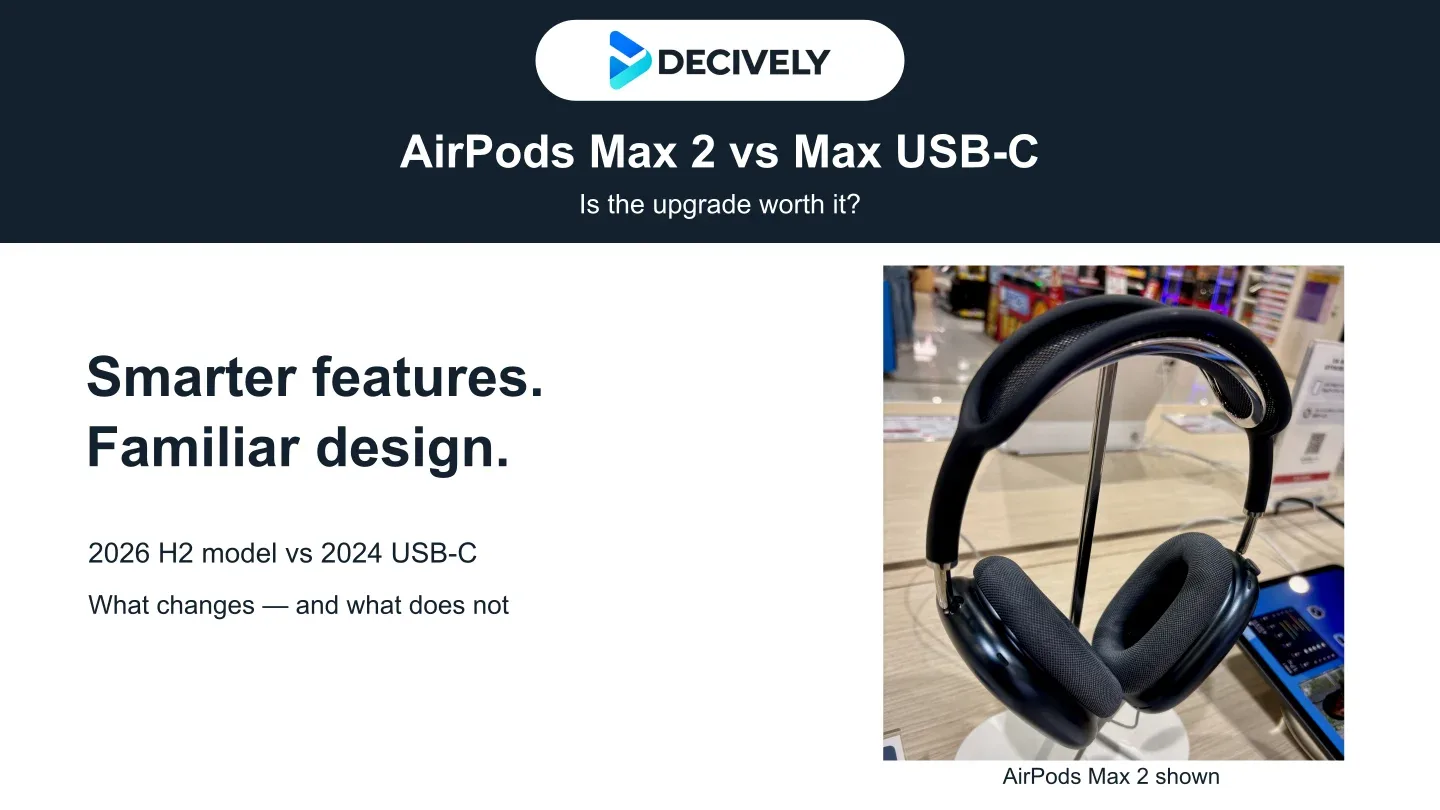
The AirPods Max 2 vs AirPods Max USB-C decision comes down to smarter listening features and the price gap. This comparison covers the 2026 Max 2 and the 2024 USB-C model—not the original Lightning version.
Quick verdict
Buying your first pair? Choose Max 2 when prices are close. Choose the older USB-C model only for a meaningful saving and if you can live without the newer features. Already own USB-C? Keep it unless stronger ANC, Adaptive Audio or Live Translation solves a specific problem for you.
Affiliate links. As an Amazon Associate I earn from qualifying purchases.
For the newer Apple features
AirPods Max 2
2026 H2 model · Midnight. The better choice when the price gap is small. Adds Adaptive Audio and Live Translation; it does not deliver a lighter design or a higher battery-life claim.
For a worthwhile discount
AirPods Max USB-C
2024 H1 model · Midnight. Already supports wired lossless audio. Check seller, condition and included accessories carefully: older listings can include used or open-box offers.
The differences that affect the buying decision
What do you actually gain with Max 2?
Apple’s H2 chip enables Adaptive Audio, which blends noise cancellation and Transparency as your surroundings change, plus Conversation Awareness and Voice Isolation. These are more useful reasons to pay extra than the similar-looking hardware.
MacRumors directly compared Max 2 with the USB-C predecessor and reported clearer noise reduction and better separation between instruments. That is an independent reviewer’s impression, not a Decively test or proof that every listener will hear a large improvement. Apple’s “up to 1.5×” ANC figure remains a manufacturer claim.
Live Translation needs the latest firmware and an Apple Intelligence-capable iPhone running iOS 26.4 or later. Availability depends on language and region. An Android phone can handle audio, calls, ANC and Transparency, but it does not unlock the same Apple feature set.
Both models already support wired lossless audio
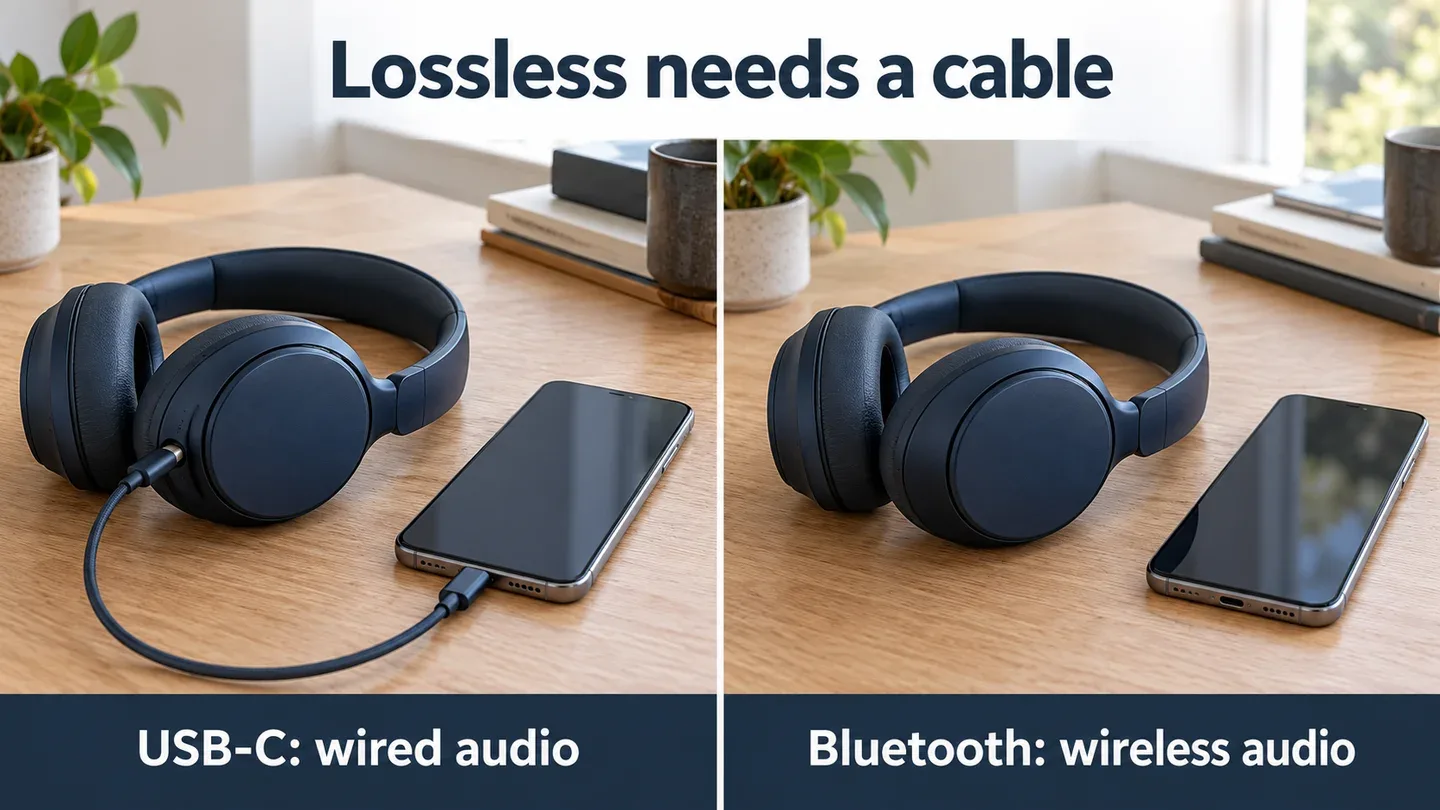
Illustration of connection types using generic headphones—not a photograph of either Apple model or a Decively test.
You do not need Max 2 simply to get USB-C lossless playback. Apple added that capability to the 2024 USB-C model through a 2025 update; its current support guide lists both generations. Update the headphones and source device, then use a compatible wired connection and lossless content. Bluetooth listening is not the lossless path.
Do not assume the cable turns Max 2 into a complete USB meeting headset. RTINGS could not get its microphone working over USB-C with laptops, including MacBooks. Apple’s setup guide says to keep Bluetooth enabled on a Mac for audio calls and features such as Siri.
Battery life and comfort are not big upgrade reasons
Apple still claims up to 20 hours of ANC listening for both models. SoundGuys measured about 21 hours for Max 2 with ANC enabled at 75 dB SPL. That is one laboratory result, not evidence of a generational battery-life improvement.
The familiar heavy design and Smart Case remain. If your current pair feels tiring or awkward to carry, changing generations is unlikely to fix that. For a different fit, compare the options in our noise-canceling headphones guide.
How much cheaper should the older USB-C model be?
Our practical buying rule: at the same price, choose Max 2. For a new buyer, a gap around $50 still favors its newer features. At a $100-or-more discount, the older USB-C model becomes more persuasive if you mainly want music, ANC and wired listening. These are Decively’s illustrative decision thresholds, not current Amazon prices.
Compare like-for-like condition. A used USB-C pair with an uncertain battery or missing accessories is not equivalent to a new Max 2. Check the seller, return terms and whether the Smart Case and USB-C cable are included.
For an existing USB-C owner, the bar is higher: you are paying to replace headphones you already own. Keep yours unless the new listening modes or stronger ANC matter enough in your actual routine.
Research notes
Research checked October 29, 2026. This is a research-based comparison; Decively has not tested these headphones. Apple supplies specifications and feature requirements; MacRumors, SoundGuys and RTINGS supply separately attributed observations. Price-gap thresholds are editorial judgments, not live offers.
AirPods Max 2 photograph: Kyu3a / Wikimedia Commons, CC BY-SA 4.0. Cropped and placed in a Decively layout.
Apple: Max 2 specifications and feature requirements Apple: 2024 USB-C specifications Apple: Max 2 announcement and ANC claim Apple: wired lossless and non-Apple setup Apple: current Live Translation requirements MacRumors: direct USB-C versus Max 2 impressions SoundGuys: Max 2 battery test RTINGS: Max 2 microphone and USB-C findings Cover photograph: Kyu3a / Wikimedia Commons Photograph licence: CC BY-SA 4.0